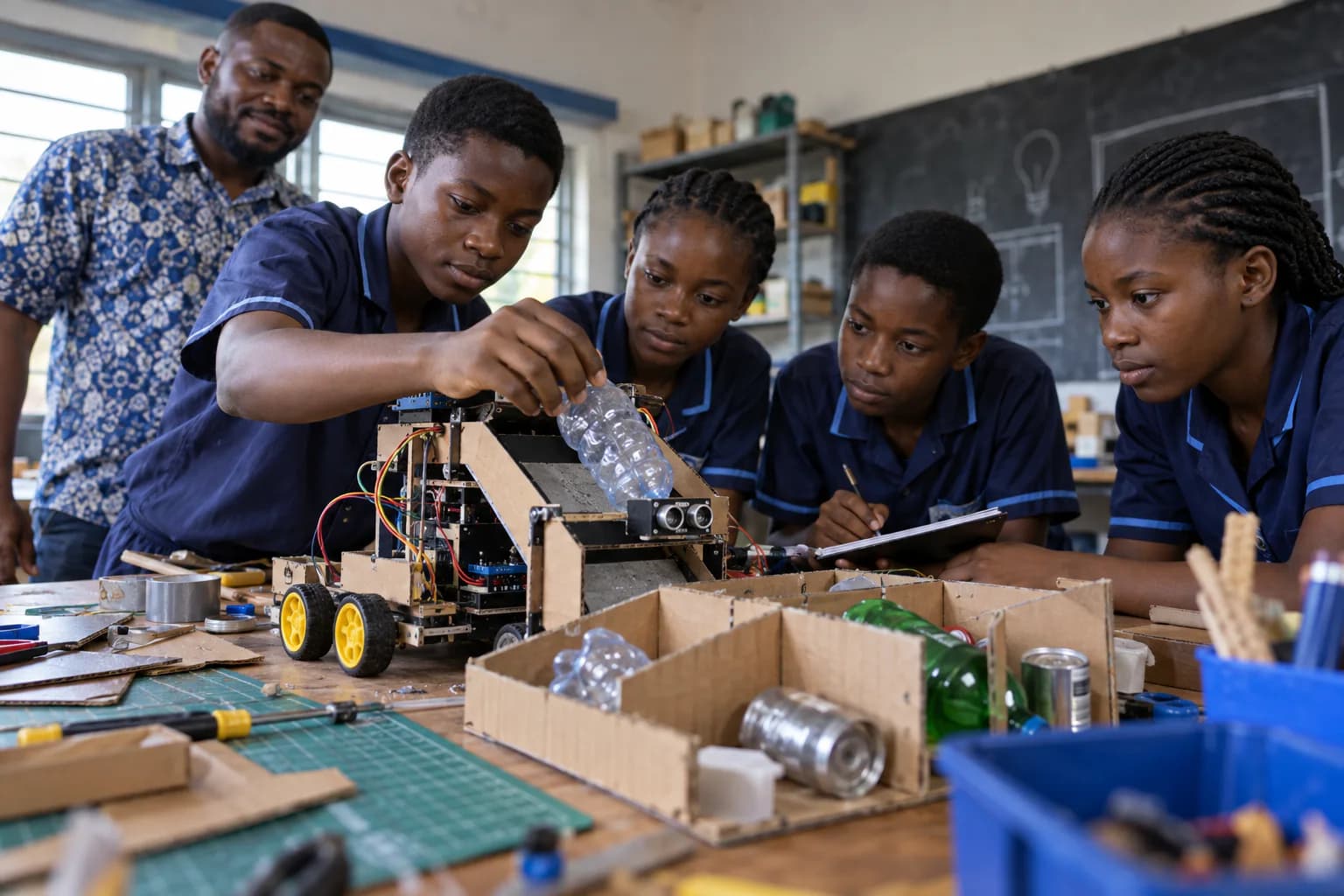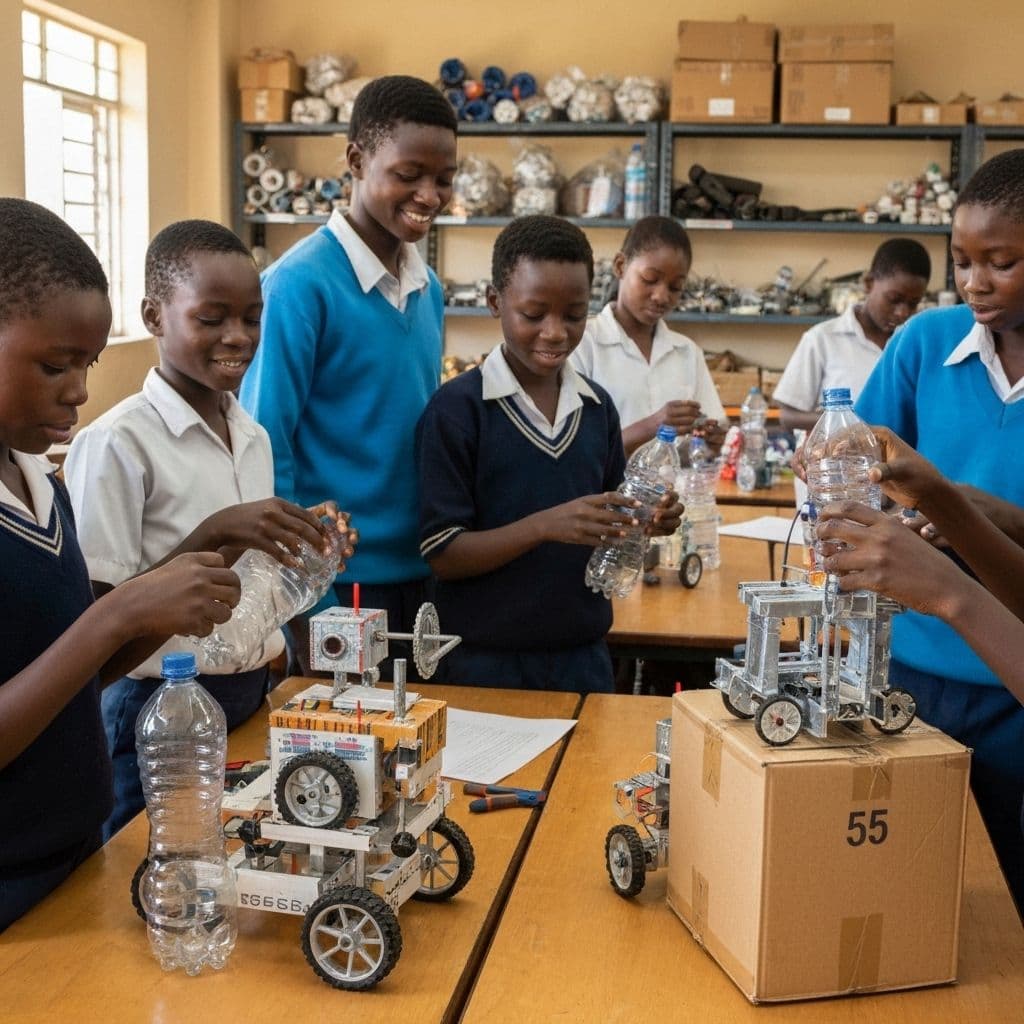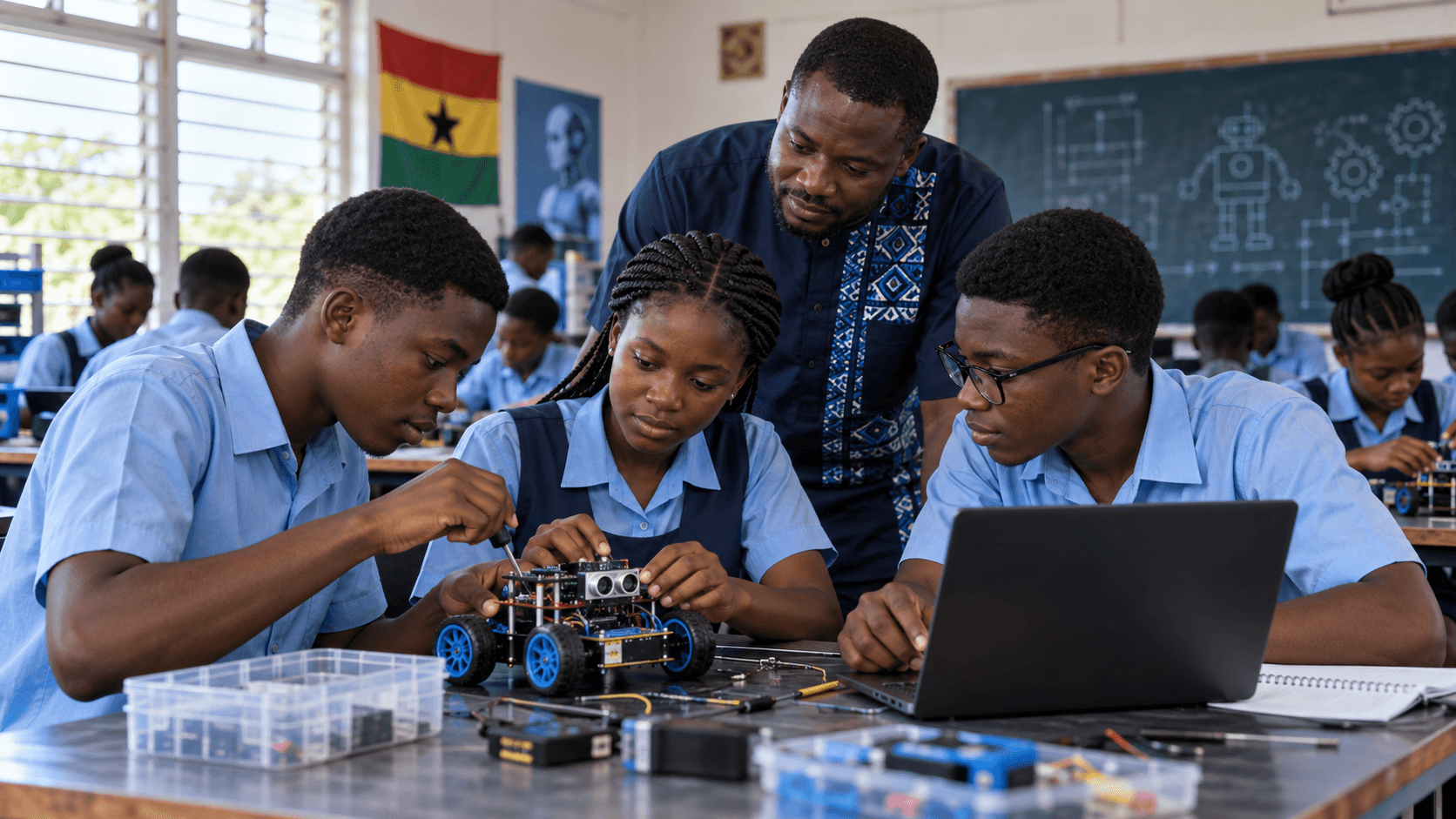
Robotics in Ghana is moving from extracurricular spectacle toward a more serious educational and industrial conversation. The clearest signal is curricular: Ghana now has a secondary robotics curriculum for SHS 1–3. That creates public legitimacy and a progression opportunity. It does not automatically create trained teachers, laboratories, assessment quality or an industry.
Ghana should judge robotics by the engineering judgement learners develop and the useful systems the country becomes able to design—not by how many kits can move across a stage.
Four robotics systems are developing at once
- School robotics: curriculum, clubs, competitions and practical STEM programmes introducing design, control and physical computing.
- Tertiary robotics: engineering departments, student teams and research groups working across automation, embedded systems and intelligent machines.
- Industrial automation: systems used or needed in manufacturing, mining, logistics, agriculture, inspection and infrastructure.
- Grassroots invention: makers and young engineers prototyping with available components, recycled materials and local fabrication.
The national opportunity lies in connecting these systems. School enthusiasm should feed into deeper technical pathways. University projects should meet industry problems. Industry should create placements, datasets, equipment access and procurement opportunities. Grassroots ingenuity should gain routes to safety testing and professional engineering support.
The curriculum opportunity
NaCCA’s secondary robotics curriculum establishes a foundation that many countries still lack. Implementation should preserve the subject’s interdisciplinary nature. Robotics is where mechanics, electronics, computation, mathematics, design and ethics encounter one another under real constraints.
A strong learning progression moves through five levels:
- sequence, sensing and cause-and-effect;
- mechanisms, circuits and block-based control;
- text programming, feedback and structured debugging;
- system integration, data and autonomous behaviour; and
- open engineering briefs with evidence, safety and trade-offs.
The kit problem
Imported kits can accelerate learning, but a kit-led programme risks tying curriculum to one vendor, obscuring engineering principles and creating maintenance dependency. Schools should specify the capability they need before choosing hardware. Platforms should support standard concepts, accessible replacement parts, teacher control, repair and movement between simulation and physical systems.
Where Ghanaian robotics should focus
Ghana does not need to begin with humanoid robots. High-value opportunity exists in practical automation: low-cost sensing, agricultural monitoring, assistive devices, warehouse and hospital logistics, environmental measurement, inspection, small-scale manufacturing and safety systems.
These areas align with real constraints and create demanding engineering education. A learner trying to measure water level reliably, control a greenhouse or build an assistive mechanism must confront calibration, energy, materials, failure and user needs.
Six priorities for the next phase
- Prepare teachers through repeated build-teach-review cycles.
- Create regional shared laboratories and mobile access where every school cannot maintain a full facility.
- Publish locally relevant engineering challenge libraries linked to curriculum.
- Connect schools to technical universities, industry mentors and progression opportunities.
- Support component supply, repair, fabrication and open technical documentation.
- Measure learner reasoning, iteration and system performance—not task completion alone.
From robotics education to robotics capability
A national robotics ecosystem emerges when young people can progress, teachers can sustain practice, universities can deepen knowledge and organisations create demand for engineering solutions. Ghana has established the curricular signal. The work now is to build the operating infrastructure around it.