Physical robots make code touch the world. Virtual laboratories make experimentation easier to repeat and distribute. Schools should not decide between them by asking which looks more advanced. The decision should follow the learning objective, operating reality and progression intended for learners.
What physical laboratories do best
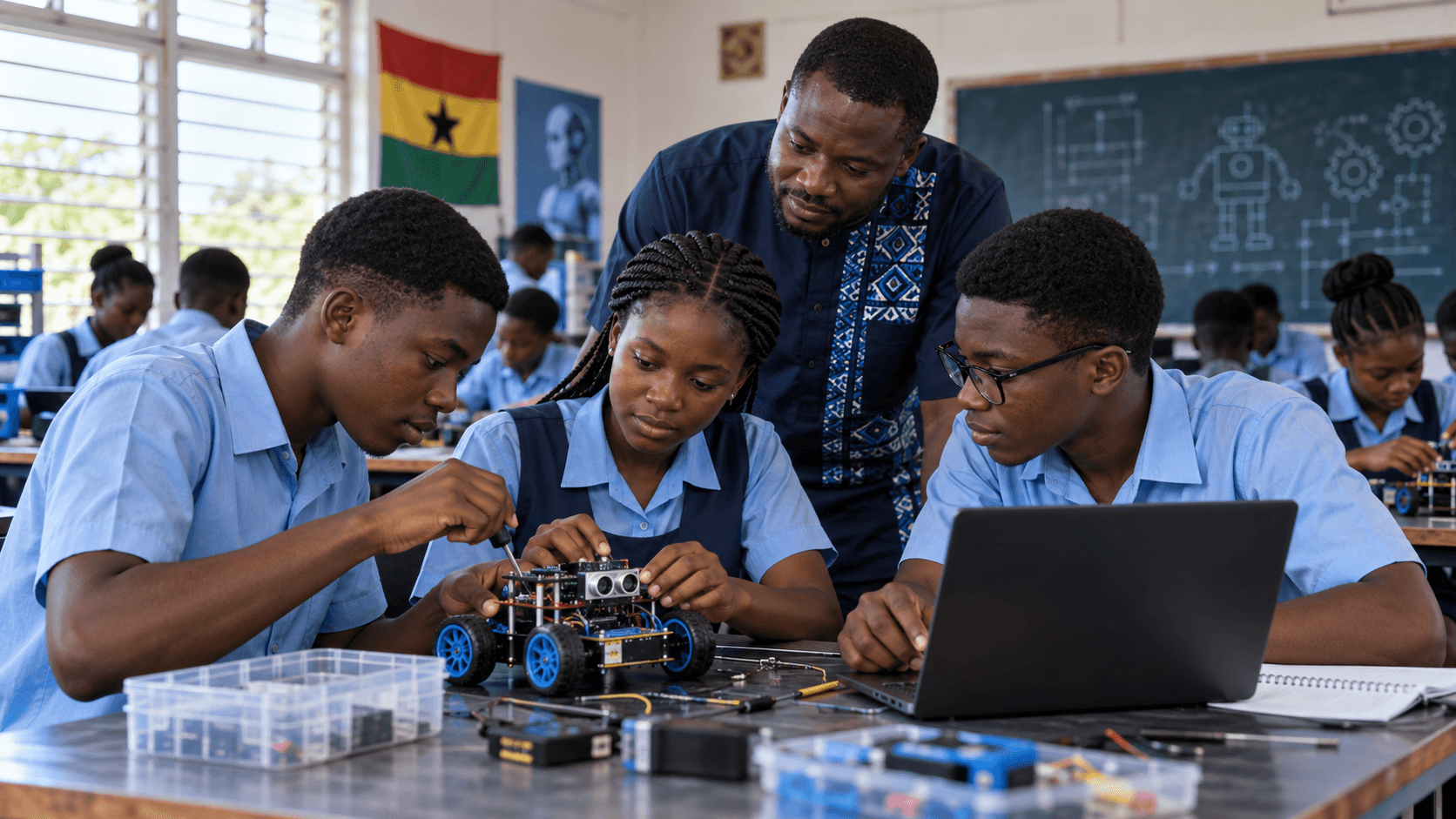
Real components expose learners to friction, tolerance, loose connections, battery behaviour, sensor noise and mechanical failure. They develop tool handling, safety, spatial judgement and the discipline of making a system work outside a perfect model.
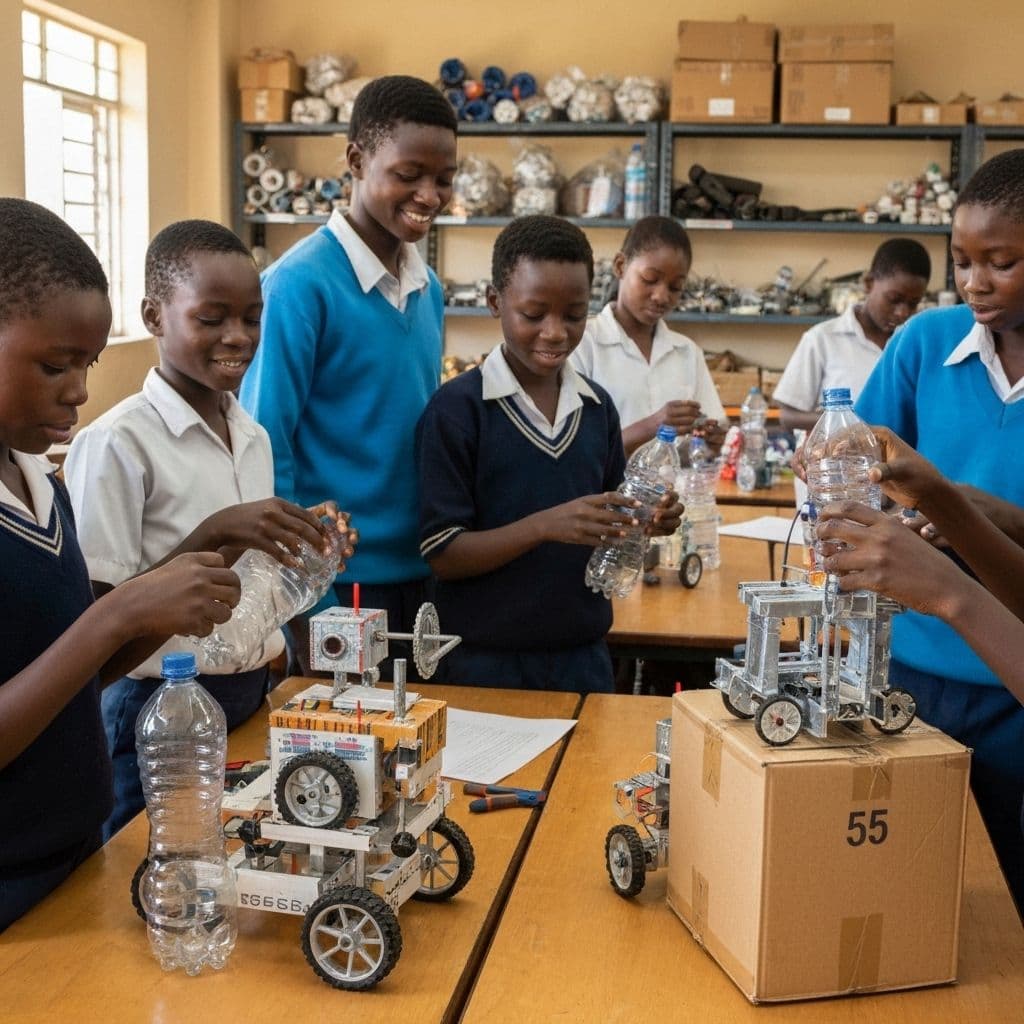
The constraints are equally real: limited kit quantities, consumables, breakage, storage, charging, replacement cycles and the need for confident facilitation.
What virtual laboratories do best
Virtual environments let more learners practise simultaneously, reset quickly, test dangerous or expensive scenarios safely and continue where equipment or connectivity is constrained. They can make underlying relationships visible and prepare learners before scarce physical lab time.
Simulation also simplifies reality. Learners may not encounter the physical variation and repair decisions that define engineering practice. A virtual success should not be mistaken automatically for a working physical design.
Use five decision criteria
- Learning goal: Is the priority conceptual understanding, coding fluency, physical construction, troubleshooting or complete system design?
- Access: How many learners need meaningful practice, how often and on which devices?
- Operating capacity: Who stores, maintains, updates and supports the environment?
- Total cost: Include replacements, licences, devices, training, connectivity and staff time.
- Progression: How will virtual and physical experiences connect across a term and across year groups?
The blended model
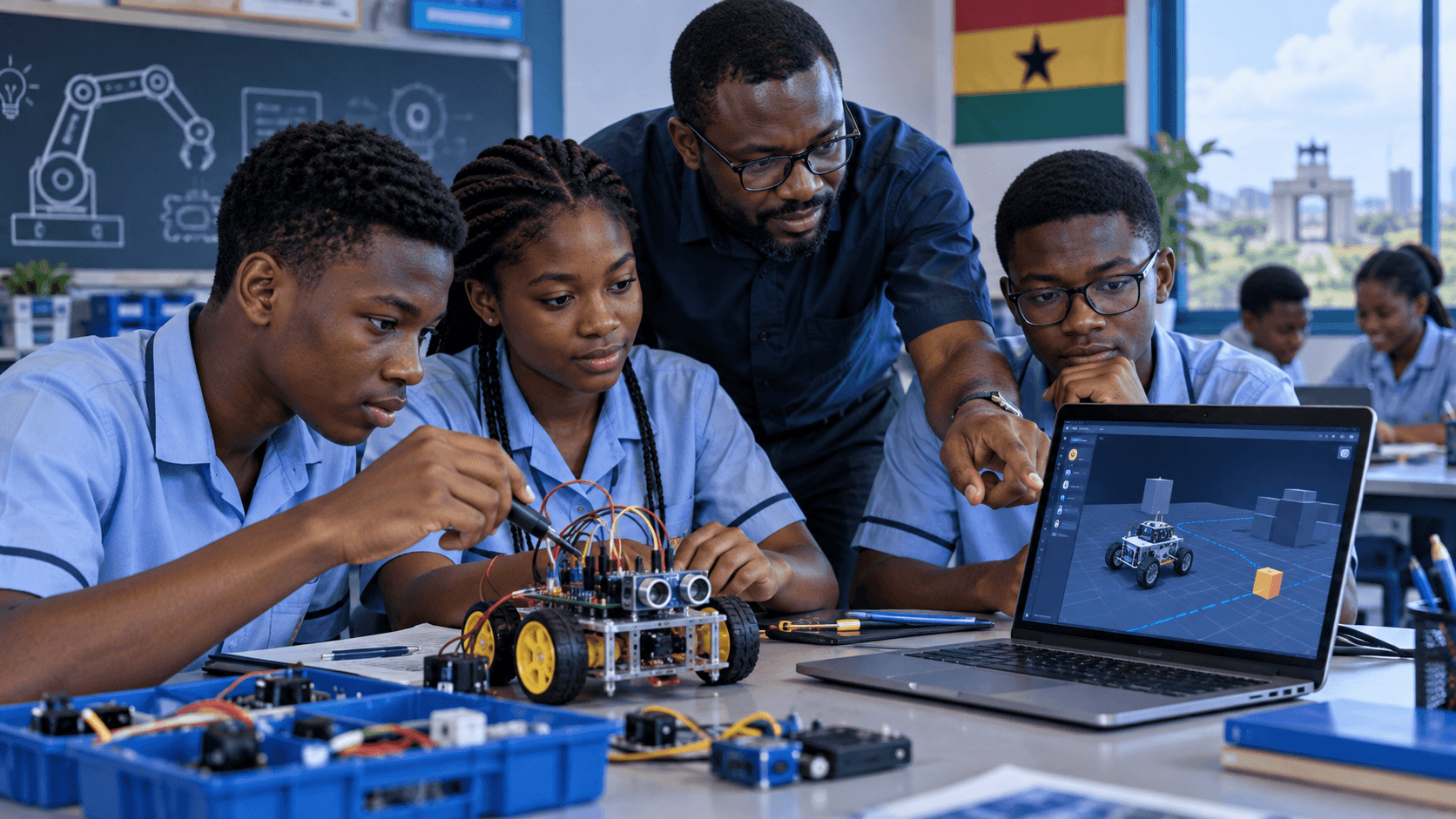
A strong sequence can move through four loops: model the system; simulate and test logic; build or configure the physical version; compare behaviour and improve both. Learners use simulation to arrive prepared, which makes limited hardware time more intellectually productive.
This principle shaped KodeVR: hardware-light access can extend robotics and engineering practice, especially where a full physical lab cannot yet reach every learner. The virtual environment is most valuable when the teacher still demands prediction, explanation, collaboration and connection to the physical world.
Choose physical-first when
- Tool handling and construction are central outcomes.
- The school has secure storage, maintenance and sufficient kit access.
- Learners are ready to investigate real sensor and mechanical behaviour.
Choose virtual-first when
- Access and repeated practice are the immediate constraints.
- Learners need conceptual preparation before limited lab sessions.
- Schools operate across dispersed sites or intermittent connectivity with local/offline support.
Choose blended when
You want the scale and repeatability of simulation alongside the material judgement of physical engineering. For many African schools, this is the most resilient long-term design.
Avoid the false comparison
A poorly facilitated physical lab is not automatically authentic learning. A well-designed virtual challenge is not automatically inferior. Judge the quality of the task, teacher, feedback and progression—not only the medium.
The false choice between authenticity and access
Physical robotics is often described as authentic while virtual robotics is treated as a compromise. That framing is too simple. Hardware makes friction, tolerances, wiring, energy and environmental uncertainty impossible to ignore. Simulation makes invisible states visible and allows rapid, repeated experimentation. Both can produce shallow learning; both can support deep reasoning.
The relevant question is which form of uncertainty learners need to confront at a particular stage. A beginner may need to see logic clearly before also managing loose wires. An advanced learner may need the stubbornness of physical reality because a perfect simulation no longer stretches judgement.
Design a deliberate transfer point
A blended programme becomes powerful when learners predict how virtual behaviour will differ from physical behaviour, then investigate the gap. They might estimate turning distance in simulation, test it on a surface, measure the error and revise the model. The transfer is not merely “now use the real robot.” It is an inquiry into what the model ignored.
Questions that should decide the model
- Is the immediate learning goal algorithmic reasoning, physical construction or system integration?
- How often can each learner meaningfully manipulate the system?
- Which devices, operating systems and connectivity conditions already exist?
- Can teachers diagnose both software and hardware failure?
- What evidence will demonstrate transfer between virtual and physical environments?
The equity consequence
Virtual access can widen practice, but only if compatible devices and teacher support are real. Physical kits can deepen experience, but only if technical roles are shared rather than captured by the most confident learners. Equity is not embedded in either medium. It is produced by scheduling, grouping, role rotation, accessibility and expectations.
The strongest African model may often be “virtual for frequency, physical for consequence”: broad access to repeated coding and modelling, followed by carefully designed hardware sessions where learners confront materials, measurement and real-world failure.
A simple allocation model
Use virtual environments for early exploration, algorithm practice, homework where access permits and rapid iteration. Reserve physical sessions for construction, calibration, sensing, testing assumptions and explaining differences between model and reality. Then require learners to return to the simulation and improve it using evidence from the physical test. This creates a learning loop rather than two disconnected laboratories.
Budget decisions should follow that sequence. A school may need fewer physical kits when virtual preparation is strong, but it must not remove hardware so completely that learners never encounter material uncertainty.
KodeVR as a live test of the blended argument
KodeVR grew from a recurring field constraint: learners were eager to code and build, but many schools could not sustain enough physical kits, powerful computers or reliable connectivity for frequent practice. The platform was designed to make virtual robotics and coding available through mobile phones, tablets and lower-specification computers while reducing dependence on continuous internet access.
KodeVR now has 10,000+ active learners. That scale does not prove that virtual learning is automatically effective; it creates a serious implementation laboratory. We can examine where learners struggle, which sequences build confidence and when physical experience becomes indispensable. The data should improve the pathway rather than become a marketing endpoint.
Virtual robotics can widen the door. Physical robotics teaches what happens after an idea meets reality.
My prediction is that African schools will increasingly adopt blended laboratory networks: virtual practice available widely, shared physical equipment used deliberately and regional hubs supporting advanced fabrication, maintenance and teacher development.