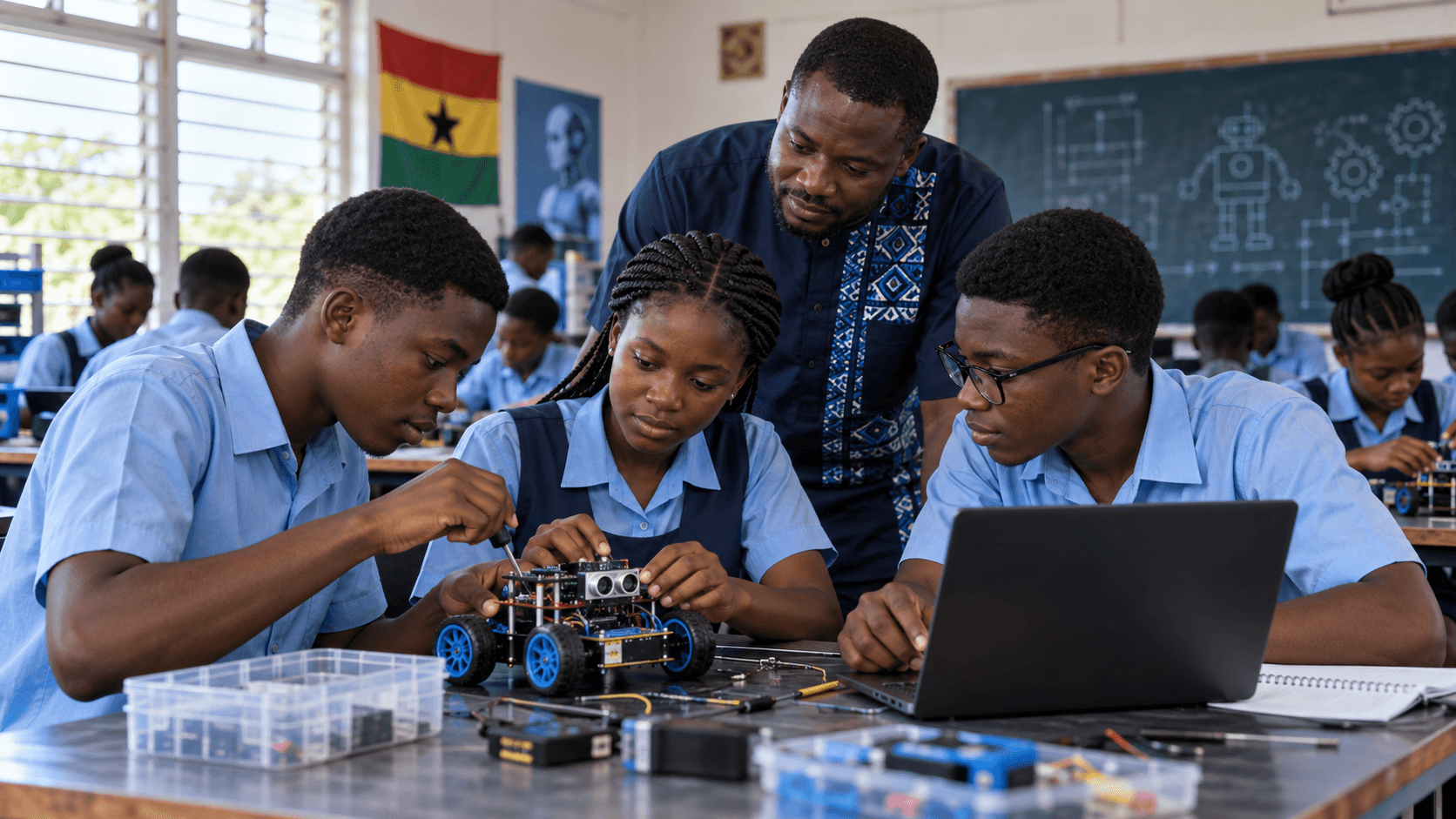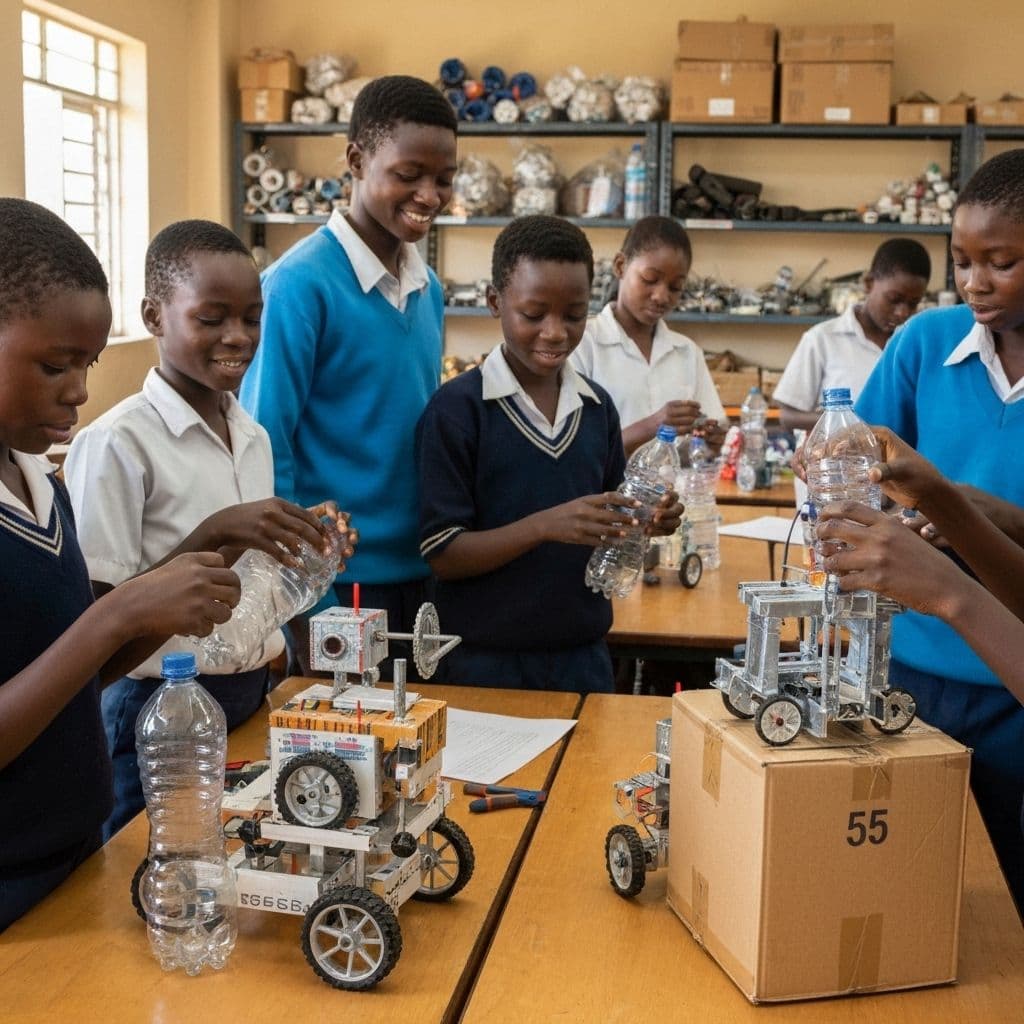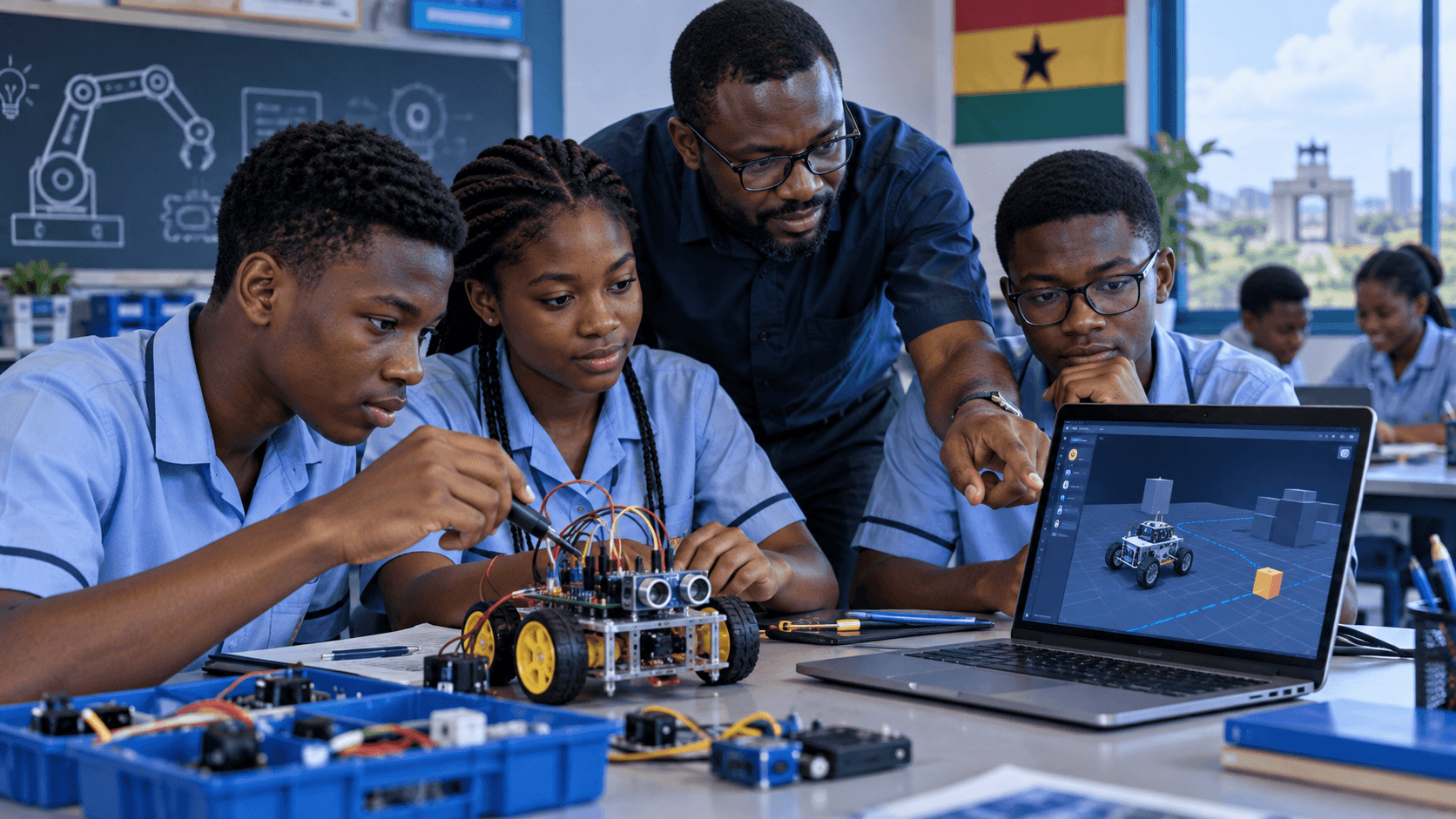
Parents and schools often ask whether a learner should begin with coding or robotics. The better question is: what kind of thinking should the learner develop next, and which medium will make that thinking visible?
Coding teaches learners to express logic. Robotics forces that logic to negotiate with the physical world. Strong pathways need both.
What coding develops
Coding can begin with almost no hardware. It helps learners decompose problems, represent rules, recognise patterns, debug and create repeatable procedures. Digital environments make iteration fast and allow every learner more practice time.
Its weakness is that beginners can manipulate blocks or copy syntax without understanding cause and effect. Good teaching asks learners to predict before running, explain after failure and transfer an idea into a new context.
What robotics adds
Robotics joins software to sensors, movement, energy, mechanics and uncertainty. A command that looks correct can fail because a wheel slips, a wire is loose or the environment changes. Learners discover that engineering is not only giving instructions; it is building a system robust enough to act.
Its constraints are cost, maintenance, limited equipment and the temptation to spend more time assembling a prescribed model than reasoning.
A better sequence by learning stage
- Early primary: unplugged sequencing, patterns, cause and effect, followed by simple floor robots or shared visual tools.
- Upper primary: block-based coding alongside sensors, motors and design challenges.
- Junior high: deeper algorithms, data and debugging combined with increasingly open robotics projects.
- Senior high: text-based programming, electronics, control, simulation, computer vision and multidisciplinary engineering.
Choose according to constraints, not prestige
If devices are available but kits are scarce, begin with coding and virtual robotics, then rotate physical hardware for testing. If learners have little experience connecting abstract instructions to outcomes, a simple tangible robot may unlock understanding. If teacher confidence is low, choose a progression the school can sustain and support educators before expanding complexity.
The blended pathway
A strong lesson can move through four environments: reason on paper, simulate the behaviour, test on physical hardware and reflect on the differences. Simulation increases frequency; hardware introduces material consequence. The comparison itself becomes an engineering lesson.
How schools should evaluate programmes
Ignore the number of platform features. Ask whether learners predict behaviour, debug independently, explain trade-offs, create original solutions and transfer concepts between software and physical systems. Also examine access: who writes the code, who handles the robot and who only watches?
The answer
For most Ghanaian learners, coding and robotics should not be rival subjects. Begin with the lowest-friction medium that makes the next concept understandable, then deliberately cross the boundary between screen and physical world. The pathway matters more than the starting tool.
A decision tree for schools
- If learners cannot yet sequence and predict instructions, begin unplugged and with simple visual coding.
- If learners understand sequence but need motivation and visible cause-and-effect, add a shared physical robot or simulation.
- If kit access limits practice, use virtual robotics for preparation and rotate hardware for testing.
- If learners can code but projects remain screen-bound, introduce sensing, electronics and physical constraints.
- If learners assemble kits successfully but cannot reason independently, reduce instructions and increase open-ended debugging.
- If advanced learners need depth, move into text programming, control, data, computer vision and mechanical design.
Four sample learning cycles
Primary—navigation: draw a route, express it as commands, simulate, run it physically and explain the difference. Junior high—automatic lighting: define a condition, model sensor input, wire a circuit and test thresholds. Senior high—line following: analyse feedback, tune control behaviour and quantify error. Advanced—crop monitoring: integrate sensing, movement, data and user requirements under cost and power constraints.
Each cycle crosses reasoning, software and the physical world. The complexity changes; the learning architecture stays coherent.
A procurement comparison that matters
- Practice per learner: minutes of meaningful control, not the number of licences or kits.
- Concept range: which computational and engineering ideas the platform supports over several years.
- Transfer: whether code, concepts or designs move to other environments.
- Teacher usability: preparation, troubleshooting and adaptation burden.
- Lifecycle cost: devices, kits, replacements, subscriptions, storage, connectivity and support.
- Accessibility: language, disability, group use and low-connectivity operation.
The assessment task that exposes shallow learning
Give learners a working program and robot they have not seen. Ask them to predict behaviour, identify one assumption, change the behaviour under a new constraint and explain the evidence from testing. Copying produces little advantage. Understanding becomes visible.
A minimum balanced annual pathway
A credible programme should give each learner repeated coding practice, several simulation investigations, at least one physical systems project, an open-ended team challenge and an individual oral or written defence. Schools can adjust the tools, but removing any element weakens the pathway.