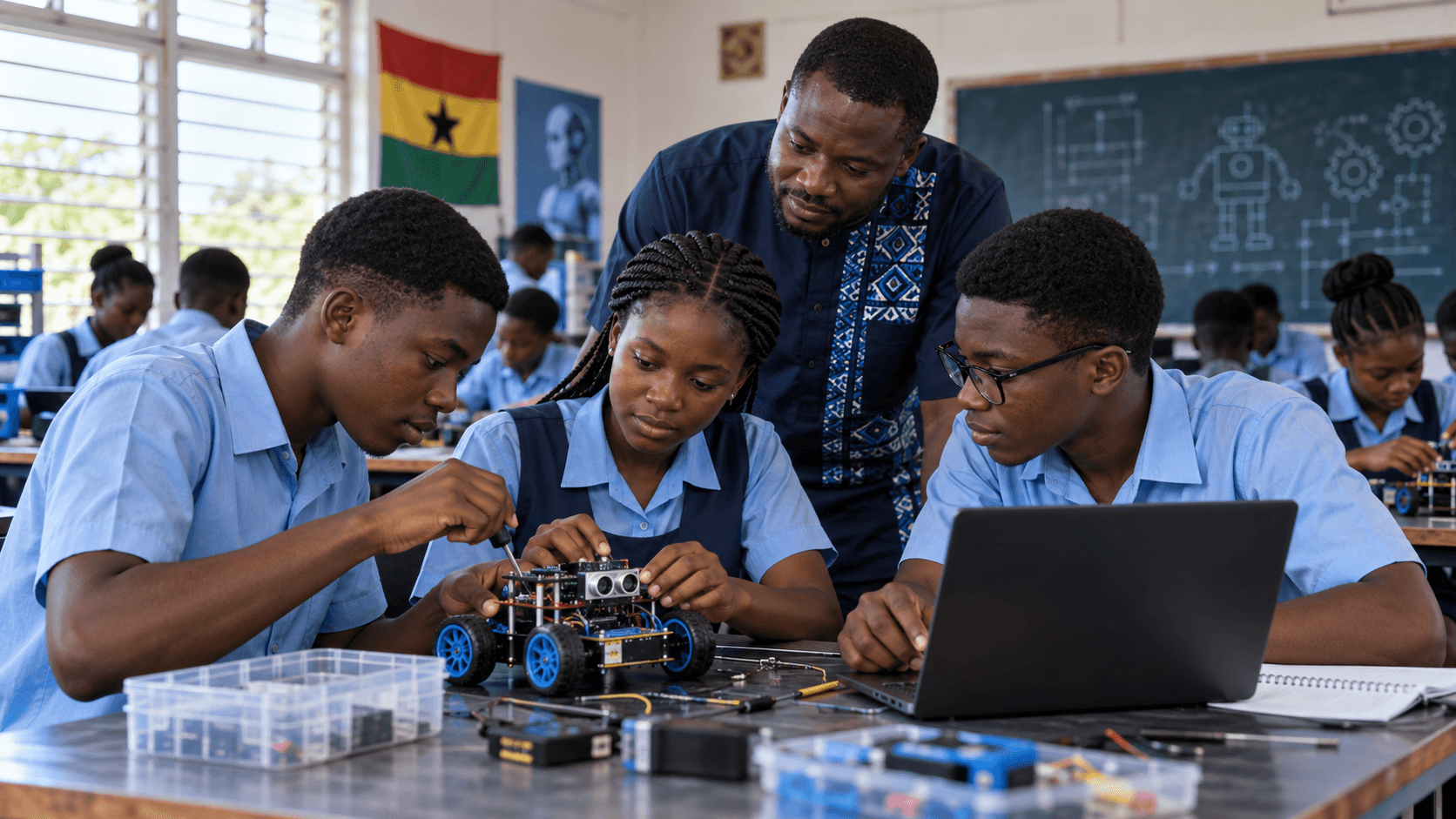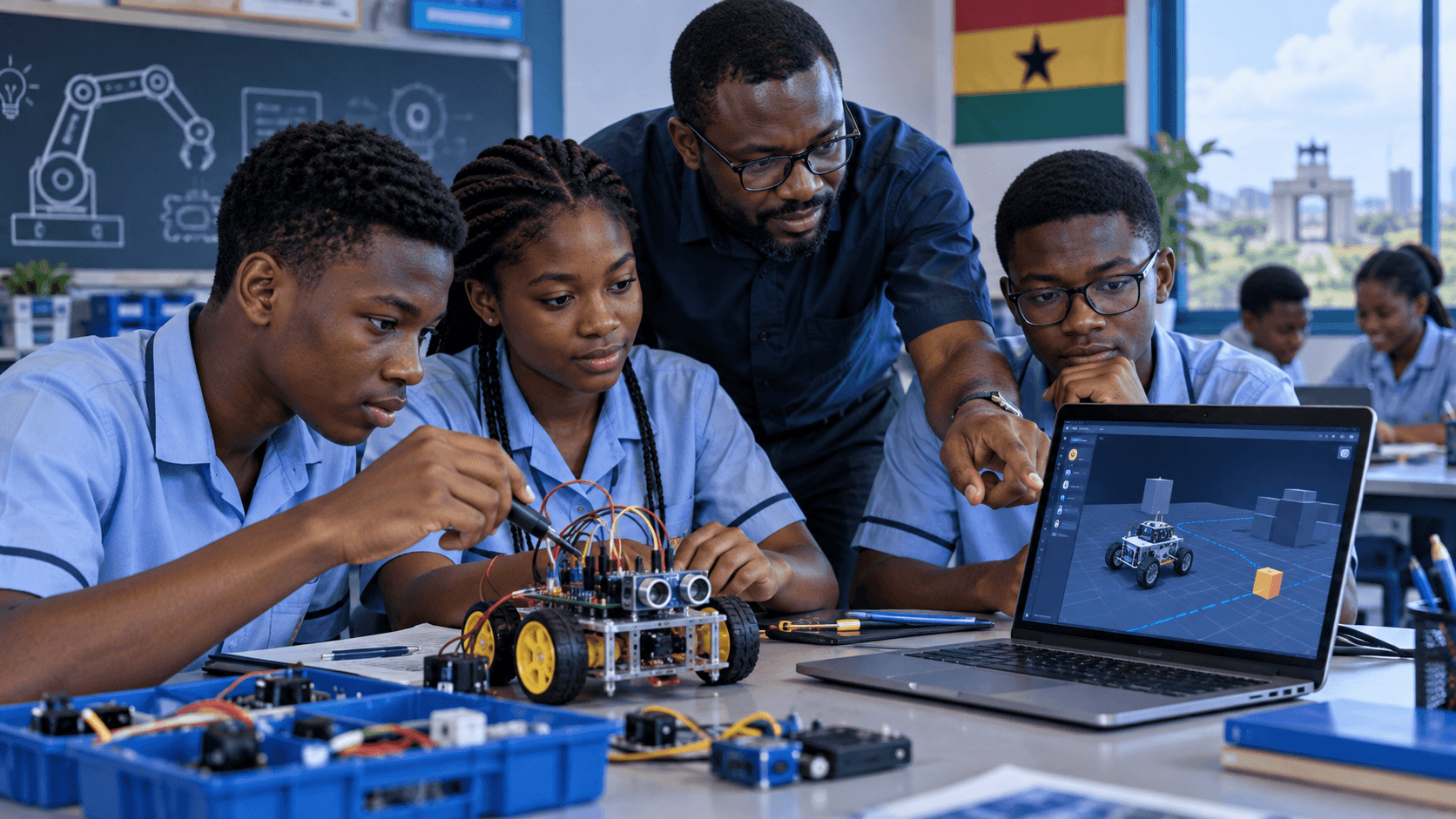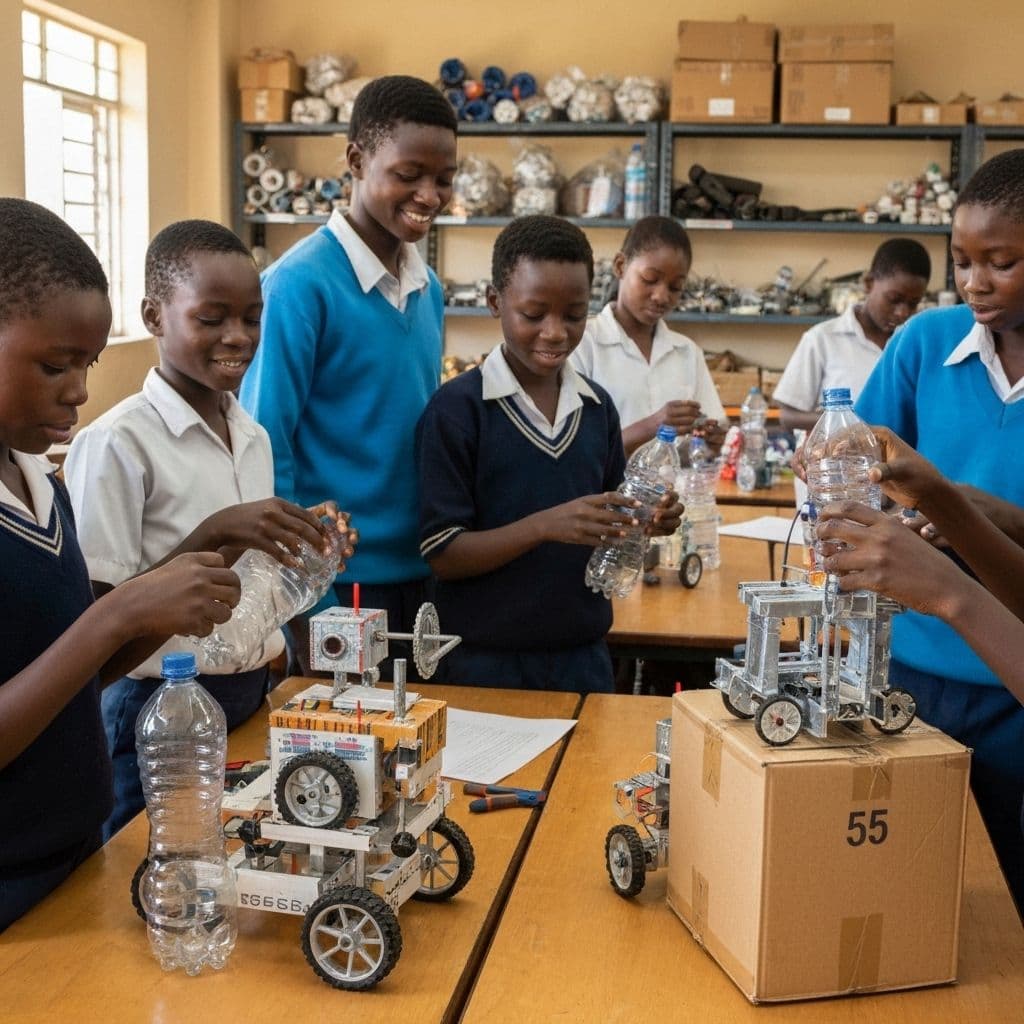
Ghana can build a meaningful robotics industry—but only if the ambition is defined more intelligently than “manufacture a Ghanaian humanoid robot.” Robotics is a value chain: sensing, control, mechanical design, software, simulation, integration, maintenance, data and sector applications. Countries create value by choosing positions where their problems, people and markets give them an advantage.
The most credible Ghanaian robotics industry will begin with useful machines and services, not national symbolism.
Where demand could emerge
Promising domains include precision agriculture, warehouse and port operations, mining inspection, environmental monitoring, infrastructure maintenance, health logistics, assistive technology, education and light manufacturing. The right entry points are tasks that are dangerous, repetitive, remote, measurement-intensive or difficult to staff consistently.
Each domain requires more than a robot. It requires workflow redesign, safety, maintenance, spare parts, training and a customer able to measure whether the system creates value.
A five-position industrial strategy
- Systems integration: adapting global components into reliable solutions for Ghanaian operations.
- Application software: perception, control, fleet management, simulation and interfaces.
- Specialised hardware: locally valuable end effectors, enclosures, sensing assemblies and ruggedisation.
- Service and maintenance: installation, repair, training, safety assurance and lifecycle support across West Africa.
- Research and talent: universities and technical institutes solving difficult problems in navigation, agriculture, language, energy and constrained environments.
The market must be developed with the technology
A technically impressive prototype can fail because no budget line, procurement route or operational owner exists. Builders should start with paid discovery: observe the task, calculate its present cost, identify failure tolerances and agree what evidence would justify a pilot.
Public agencies and established firms can create challenge-based procurement programmes with staged funding. This gives teams access to real environments while protecting buyers from premature scale.
What universities should do differently
Student projects should become reusable research assets: documented designs, datasets, benchmarks and maintained code. Universities need shared facilities that support multidisciplinary teams across mechanical engineering, electronics, computer science, design and domain faculties. Industry engineers should help define problems and evaluate prototypes.
Standards, safety and trust
Robotics moves software into the physical world. Failure can damage equipment or injure people. Ghana's industry will need risk assessment, safe operating procedures, cybersecurity, traceability and clarity about human control. Safety is not a burden added after innovation; it is what allows adoption.
A ten-year sequence
- Years 1–3: map demand, fund testbeds, strengthen laboratories and train integration teams.
- Years 3–6: build sector-specific suppliers, local maintenance capacity and procurement references.
- Years 6–10: deepen specialised components, research intellectual property and regional exports.
What success should mean
Success is not the number of prototypes unveiled. It is Ghanaian firms solving valuable physical-world problems, employing advanced technical teams, maintaining deployed systems and exporting capability. Ghana can build robots—but the larger opportunity is to build the institutions and companies that make robotics useful.
The robotics opportunity screen
Before funding a robotics solution, score the task against seven conditions:
- Value: is the present task costly, dangerous, slow or inconsistent enough to justify automation?
- Structure: is the environment predictable enough for a machine to operate reliably?
- Data: can the system sense the information needed to act?
- Failure tolerance: what happens when perception, control or power fails?
- Integration: which people, machines and information systems must change around it?
- Serviceability: can local teams maintain critical components and diagnose faults?
- Market: is there a customer with budget, authority and a reason to adopt?
A high-visibility problem with weak serviceability or no buyer is a research project, not yet a business.
Three Ghanaian testbed models
- Industrial testbed: a port, mine, warehouse or manufacturer publishes narrow operational challenges and provides supervised access to the environment.
- Agricultural testbed: farms, research stations and extension teams evaluate sensing, navigation and manipulation across seasons—not one demonstration day.
- Public-interest testbed: universities and agencies test inspection, environmental monitoring, disability or health-logistics systems with explicit safety and procurement routes.
Build, buy or integrate?
Build when local conditions create a distinctive requirement or intellectual-property opportunity. Buy when a mature system meets the need and local invention would add little value. Integrate when global components can be combined with local software, tooling, ruggedisation and service. Integration is not inferior innovation; it is often the fastest path to an industrial capability base.
The first-customer contract should include
- a baseline for the current task and a measurable acceptance test;
- defined operating conditions and failure boundaries;
- safety, cybersecurity and human-override responsibilities;
- maintenance time, parts availability and staff training;
- ownership of data and improvements created during the pilot; and
- an exit plan if performance or economics do not hold.
The workforce map
A robotics industry needs technicians, machinists, CAD designers, embedded engineers, control engineers, computer-vision specialists, safety professionals, product managers, field operators and sales engineers. Ghana's strategy should map training to these roles instead of collapsing the entire opportunity into “learn robotics.”