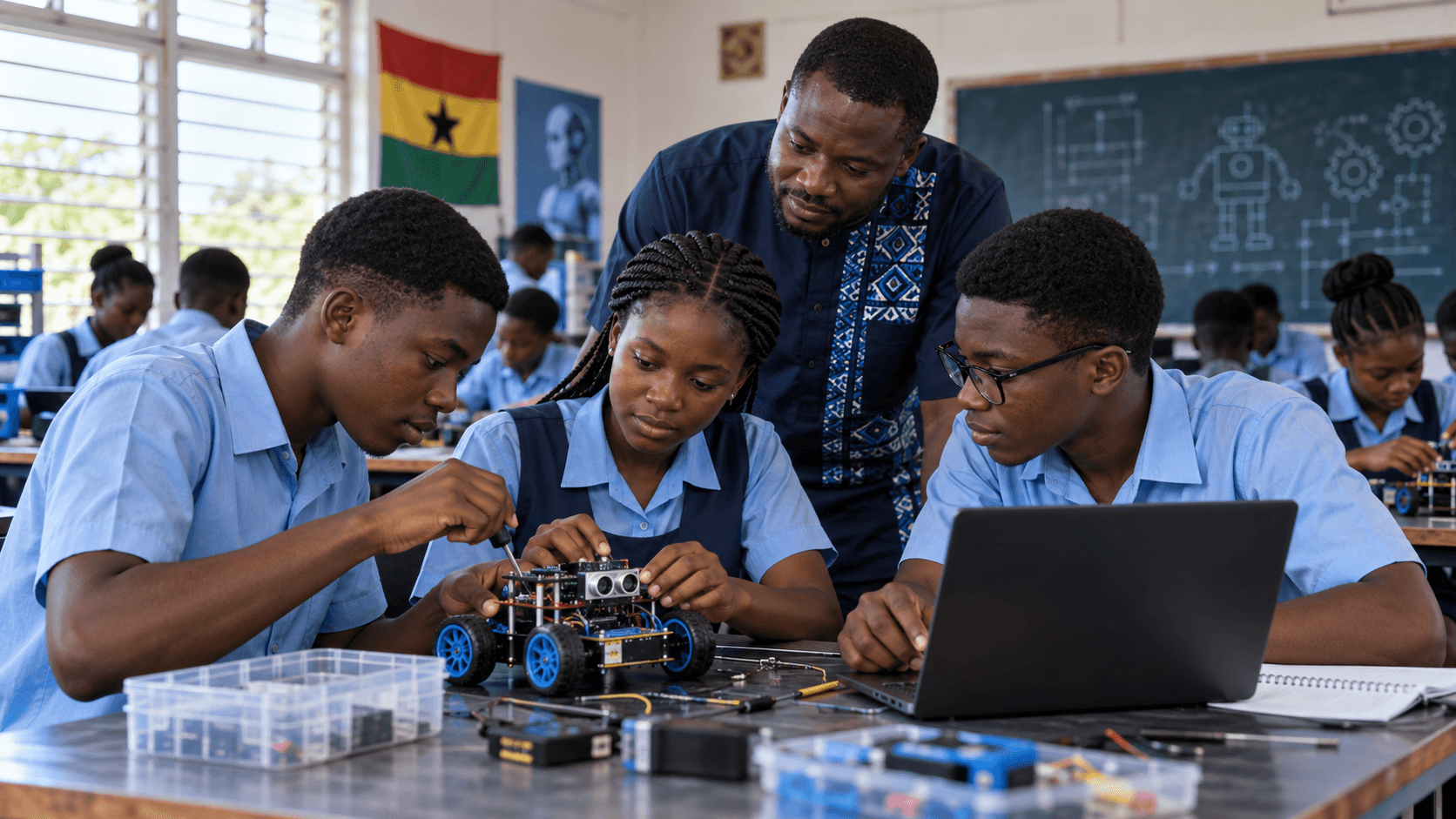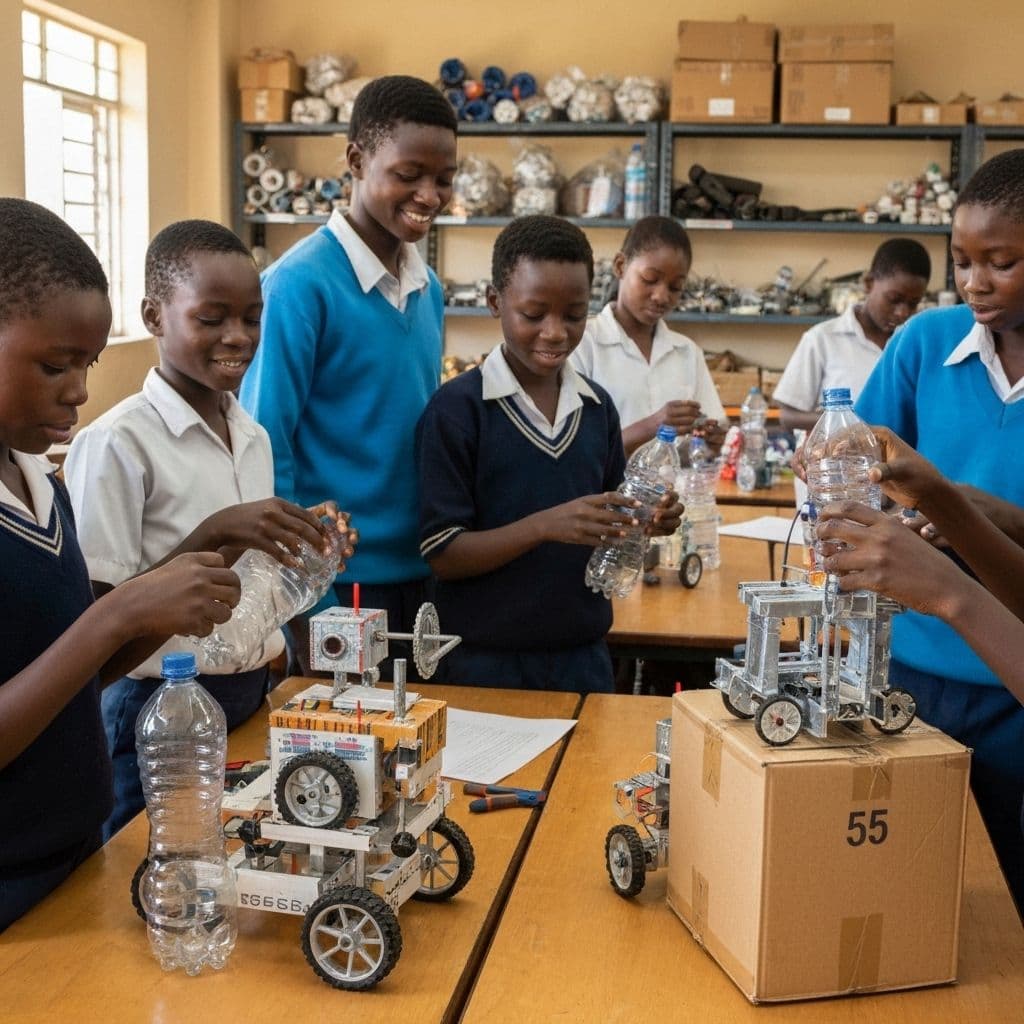
Robotics creates unusually visible moments of learning. A learner watches a machine respond to code they wrote. A team argues over why a sensor failed. A teacher who began the session cautiously starts redesigning the challenge. These moments are powerful—but they can also make a programme look more successful than it is.
Across work that has reached more than 25,000 learners, trained over 2,500 educators and engaged more than 100 schools, I have learned to look beyond the excitement.
The real evidence of a robotics programme is not what happens while the facilitator is in the room. It is what learners and teachers can do when the facilitator is gone.
Lesson one: curiosity is abundant
Learners do not need to be persuaded that making a machine move is interesting. The scarcity is sustained access: enough time, guidance and increasingly difficult problems for curiosity to become competence.
Lesson two: the learner holding the robot is not always the learner doing the thinking
Group work can hide unequal participation. Confident learners take the laptop; others record or watch. Roles should rotate deliberately: programmer, systems tester, builder, documenter and presenter. Inclusion must reach the technical centre of the task.
Lesson three: failure needs a language
Beginners often experience failure as proof that they are “not technical.” Teachers can change this by making diagnosis explicit: What did we expect? What happened? Which variable can we isolate? What evidence would rule out a cause? Debugging becomes both a technical and emotional capability.
Lesson four: kits do not create progression
A school can own impressive equipment and repeat the same beginner activity every term. Progression requires a curriculum that increases conceptual difficulty: sequence, condition, feedback, control, sensing, uncertainty, optimisation and independent design.
Lesson five: teacher confidence grows through supported practice
Tool training is not enough. Educators need to rehearse facilitation, teach real learners, receive coaching and solve predictable technical problems. The strongest teacher is not the one who knows every answer; it is the one who can keep inquiry moving when the answer is not obvious.
Lesson six: local problems deepen the engineering
A generic obstacle course can teach control. A prototype inspired by drainage, crop monitoring, accessibility or waste introduces users, environment, cost and consequence. Relevance turns a technical exercise into design judgement.
Lesson seven: virtual and physical learning should reinforce each other
Virtual robotics lets more learners practise more often. Physical robotics exposes assumptions to friction, tolerances, power and failure. A deliberate blended pathway gives schools both access and engineering depth.
Lesson eight: measurement changes programme quality
When a programme measures only attendance, it optimises for attendance. When it examines predictions, artefacts, explanations, independent debugging, teacher delivery and learner progression, programme design becomes more serious.
The principle I now use
Every robotics investment should strengthen three things at once: learner agency, educator capability and institutional continuity. If one is missing, the impact is fragile.
Sources and related evidence
- CNN: Jonathan Kennedy Sowah and InovTech STEM education
- Voice of America: robotics learning in Ghanaian communities
- Jonathan Kennedy Sowah: impact and field evidence
- How to Measure STEM Learning Beyond Learners Reached
The field observation sheet I wish every programme used
During a session, an observer should record evidence at ten-minute intervals:
- who is touching the device, robot and code;
- which learner generated the current idea;
- whether the team predicted before testing;
- what happened after failure;
- which questions the facilitator asked;
- whether the explanation uses evidence; and
- which learners have become silent or peripheral.
This small protocol reveals participation and pedagogy that a final photograph cannot show.
A debugging routine learners can carry anywhere
- State the expectation: what exactly should have happened?
- Observe precisely: what happened instead, and when?
- Separate the system: code, connection, component, power, mechanics or environment.
- Change one variable: avoid random rebuilding.
- Record the result: what evidence became stronger or weaker?
- Explain the fix: why did the change work?
This routine matters beyond robotics. It builds a disciplined relationship with uncertainty.
The inclusion audit after every project
Ask each learner privately which roles they performed, which decision they influenced and which skill they want next. Compare responses by gender, confidence level, disability and prior access. A team can complete a sophisticated robot while reproducing exclusion inside the group.
What schools should retain after an external programme
- a tested sequence of lessons and editable project briefs;
- at least two educators able to deliver and troubleshoot;
- an inventory, storage and repair process;
- learner portfolios that establish the next starting point;
- a timetable commitment and named school owner; and
- a simple dashboard for access, progression and equipment health.
The questions I now ask before saying yes
Will learners receive enough time to move beyond a demonstration? Who continues the work? Which technical role will every learner perform? What becomes harder in the next term? How will the school repair small failures? Which evidence would persuade us that the programme should change?
If those answers are missing, adding more equipment or a larger launch will not repair the design.