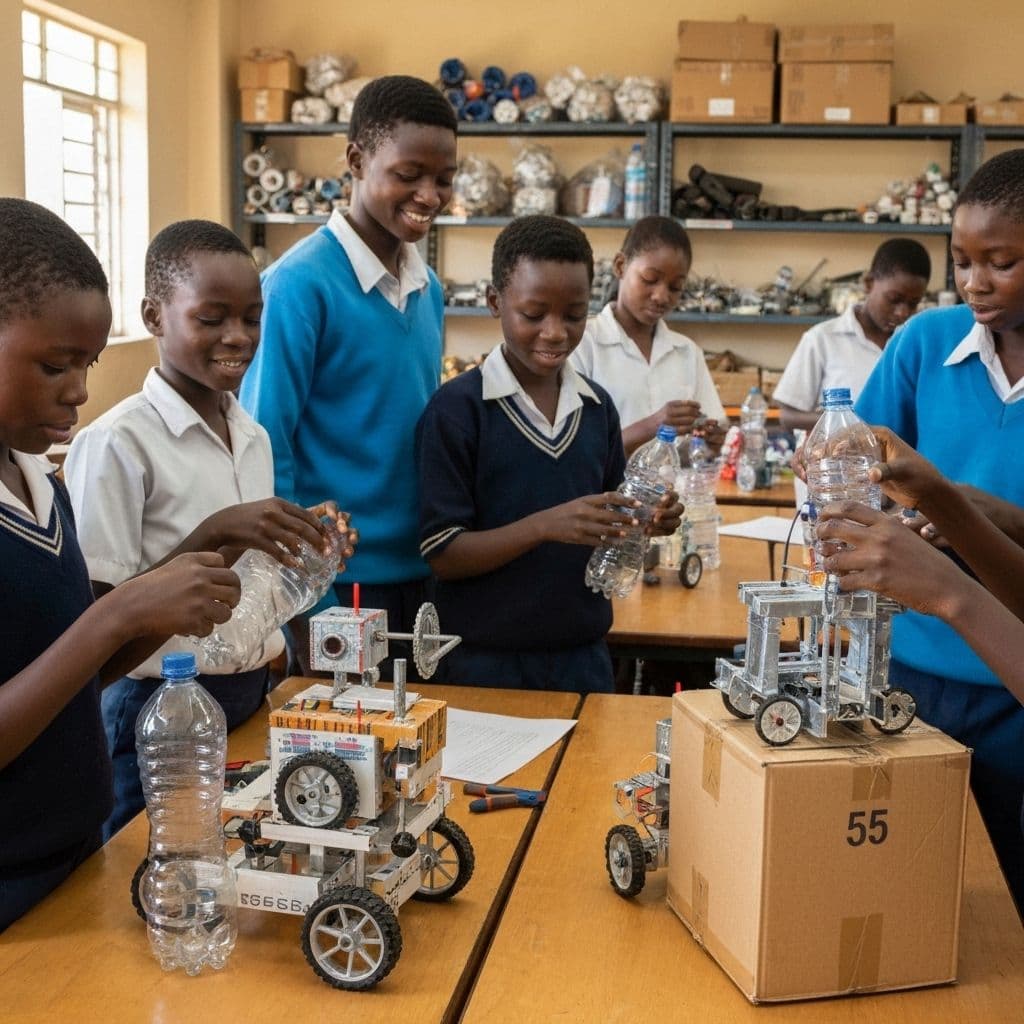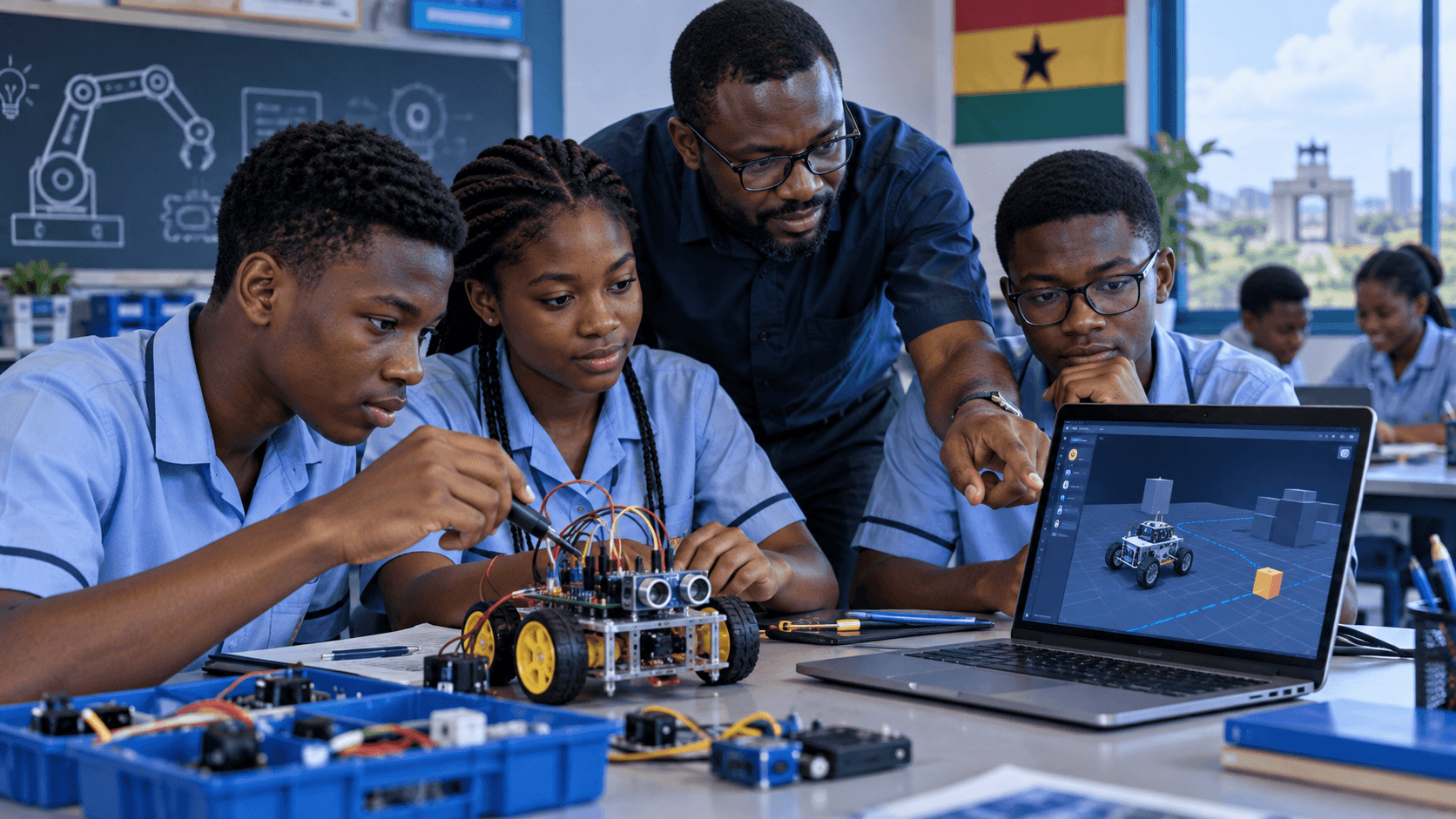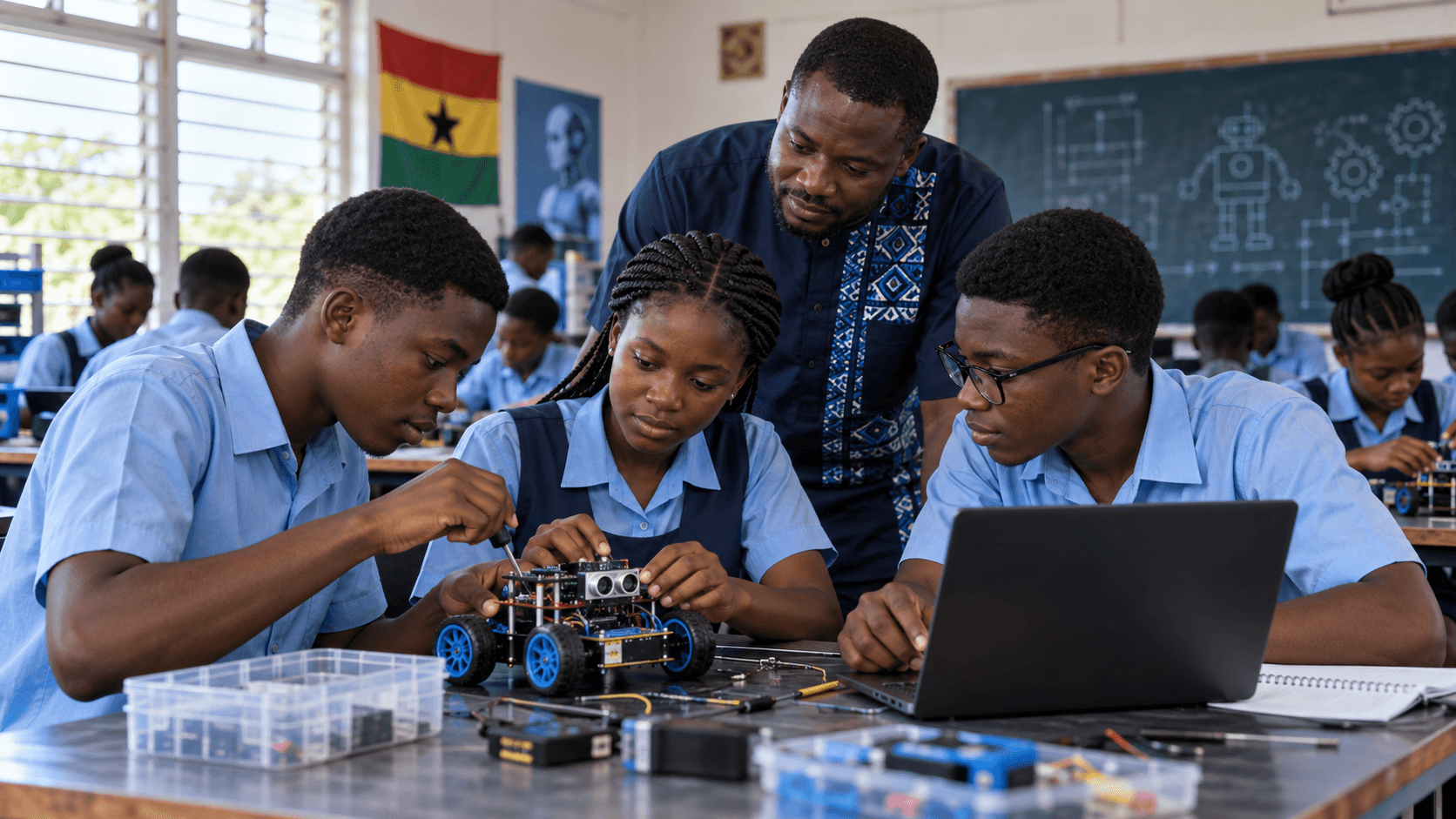
A room can contain robots and still fail to produce engineering thinking. It can have immaculate workbenches, impressive screens and a ribbon-cutting photograph while remaining disconnected from curriculum, inaccessible to most learners and dependent on one enthusiastic teacher.
This is why the phrase “STEM lab” needs a more demanding definition. A lab is not the physical room. It is a capability system: the coordinated conditions that give learners repeated opportunities to investigate, design, build, code, test, explain and improve.
Some schools need a dedicated space. Others may begin with mobile kits, virtual robotics, classroom stations or a shared maker area. The architectural form matters less than whether the system produces equitable, progressive and durable learning.
Equipment makes a room look like a laboratory. Operating discipline makes it behave like one.
The seven systems inside a serious laboratory
- Purpose: a clear connection to learner capability, curriculum and the school’s educational strategy.
- Progression: a pathway from foundational systems thinking to coding, physical computing, robotics and original engineering.
- People: a prepared teacher team, coaching, peer leadership and technical support.
- Access: timetable, group routines and inclusion rules that prevent the lab becoming a privilege for a small club.
- Technology: interoperable, age-appropriate, repairable tools matched to the intended learning.
- Operations and governance: storage, safety, inventory, privacy, maintenance, consumables and accountable ownership.
- Evidence: authentic artefacts, design reasoning, teacher practice, progression and utilisation data used for improvement.
A weakness in one system reduces the productivity of the others. More equipment cannot compensate for absent timetable access. A strong curriculum cannot compensate for teachers who have no preparation time. High attendance cannot prove that learners developed capability.
Design backwards from the learner experience
Imagine the ordinary lesson before drawing the room. How many learners enter? What problem are they investigating? Which parts require a device? How are roles rotated? Where do unfinished prototypes go? How does the teacher see every group’s reasoning? What happens when a battery fails?
This backwards design determines work surfaces, storage, power, sight lines, quantities and tool selection. It also reveals when a fixed lab is not the first priority. If the school cannot protect regular practice time, a smaller mobile model may produce more learning while institutional readiness develops.
Move beyond the competition-team model
Competitions can create aspiration, discipline and public celebration. They should sit at the edge of a broader classroom entitlement, not become the entire programme. Every learner deserves the intellectual experience of decomposition, modelling, measurement, debugging, iteration and teamwork—even if only a smaller group pursues advanced competition pathways.
Equity must be designed operationally. Rotate roles so every learner codes, builds, tests, documents and presents. Review who receives practice time and leadership. Remove physical, linguistic and social barriers. Track progression, not only participation.
Use a blended physical–virtual pathway
Physical robotics teaches material consequence: friction, wiring, tolerance, sensor noise and the stubbornness of real systems. Virtual robotics increases practice frequency, allows rapid experimentation and stretches limited hardware. A blended pathway can use simulation for repetition and hardware for reality.
The correct mix depends on the learning objective, device base, teacher capability, group size and operating budget. Schools should avoid treating virtual tools as inferior or physical kits as automatically authentic. Authenticity comes from the quality of the problem, decisions and evidence.
Budget for life after commissioning
A laboratory budget should make three years visible. Include consumables, batteries, replacement components, repairs, licences, connectivity, teacher development, programme coordination and measurement. Establish local repair routes and keep a small inventory of common failures.
Utilisation should be reviewed each term. A simple dashboard can track active teaching hours, unique learners, practice frequency, teacher ownership, equipment availability, project quality and operating incidents. Low use is not a reason to hide the data; it is a signal to repair the system.
The readiness decision
A school is ready for a laboratory investment when it can demonstrate a capability promise, protected timetable, teacher team, operating owner, recurring budget and evidence plan. If some conditions are weak, leaders can begin with a phased model while deliberately building readiness.
Every school needs access to serious STEM learning. Not every school needs the same room, kit or sequence. The goal is not uniform infrastructure. It is a dependable capability system that turns African learners from spectators of technology into people able to question, build and shape it.
Download the STEM Programme Operating System (PDF) for readiness gates and implementation roles. Use it with the STEM Investment Board Framework when planning the budget.