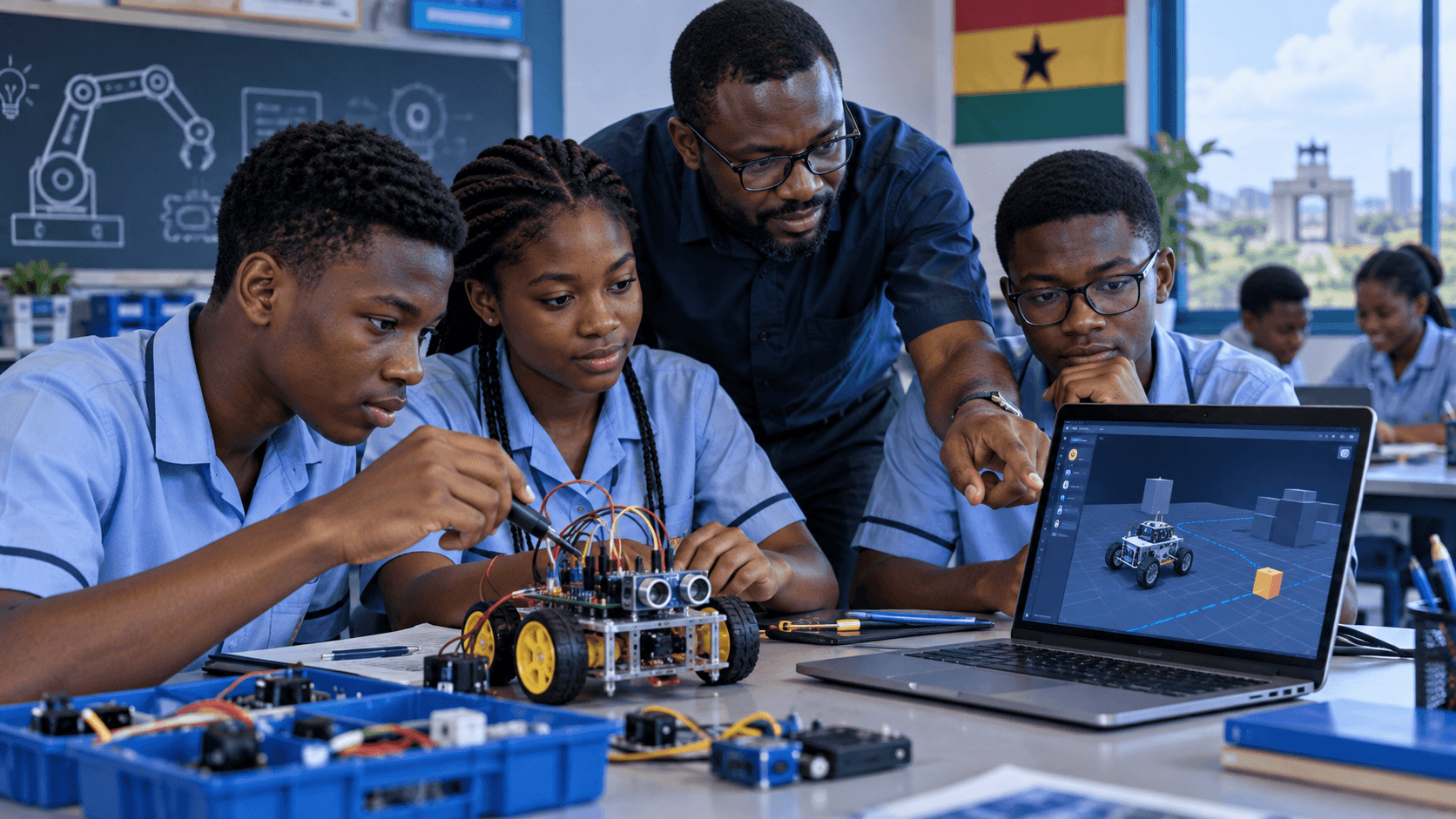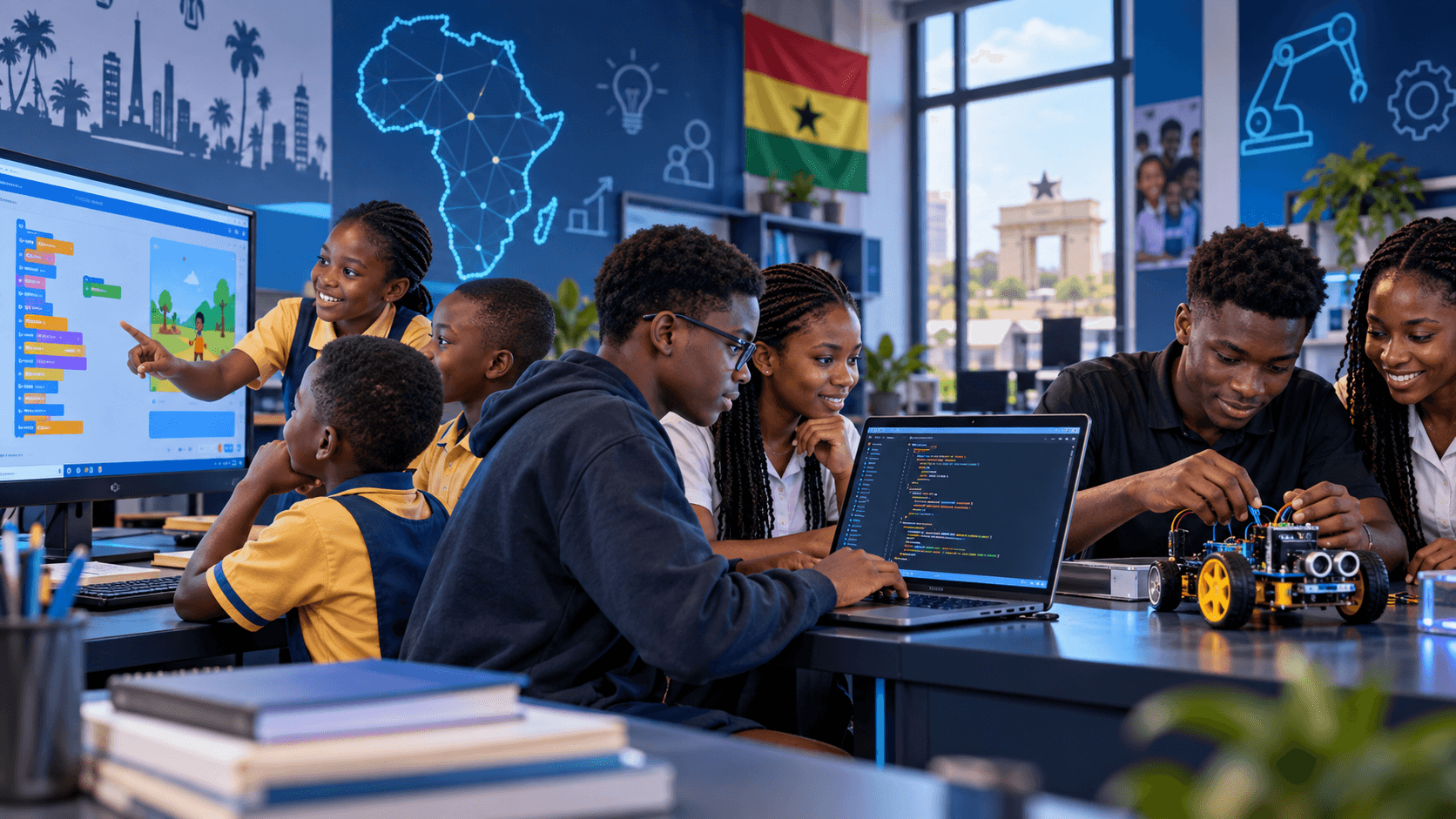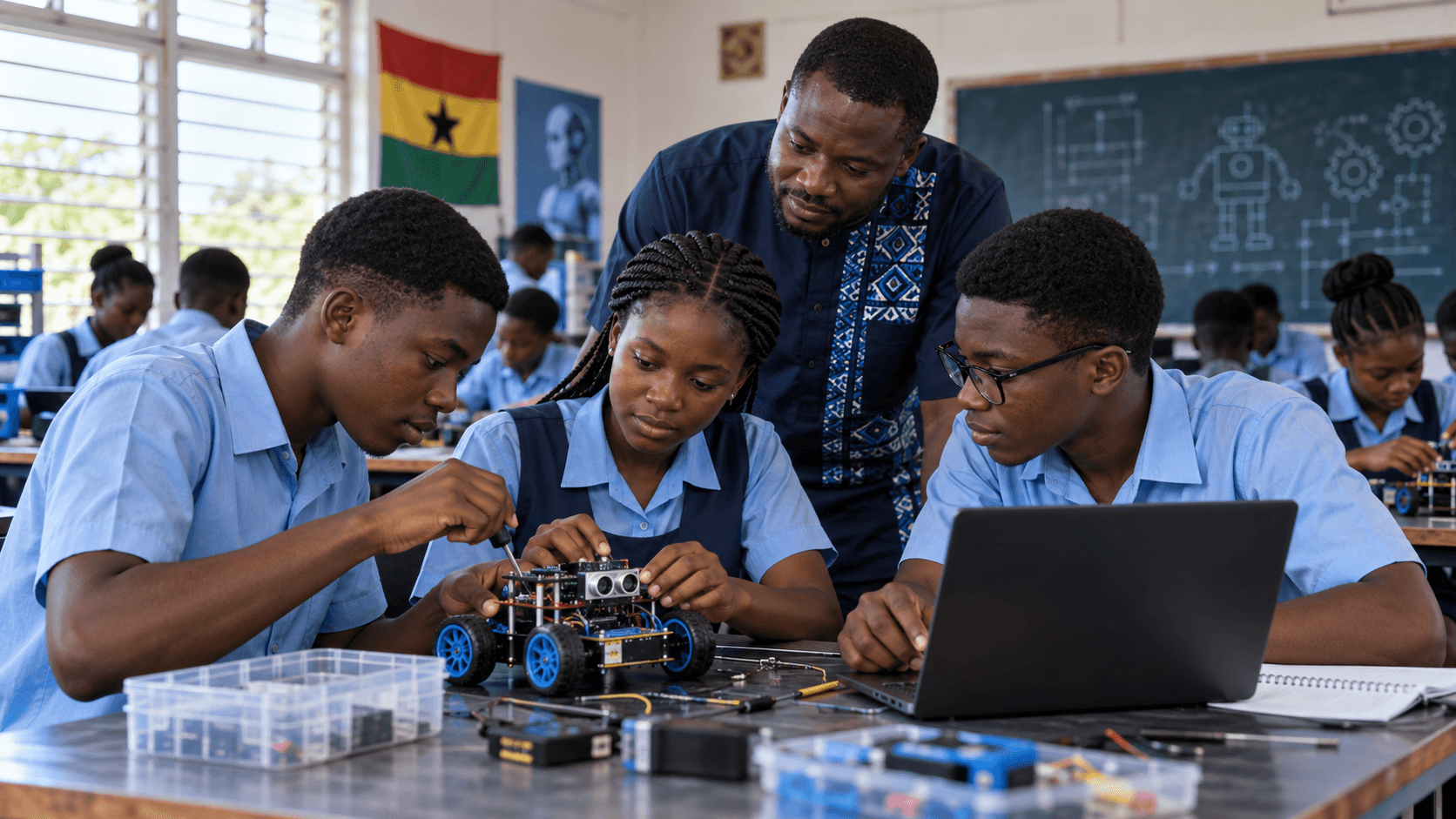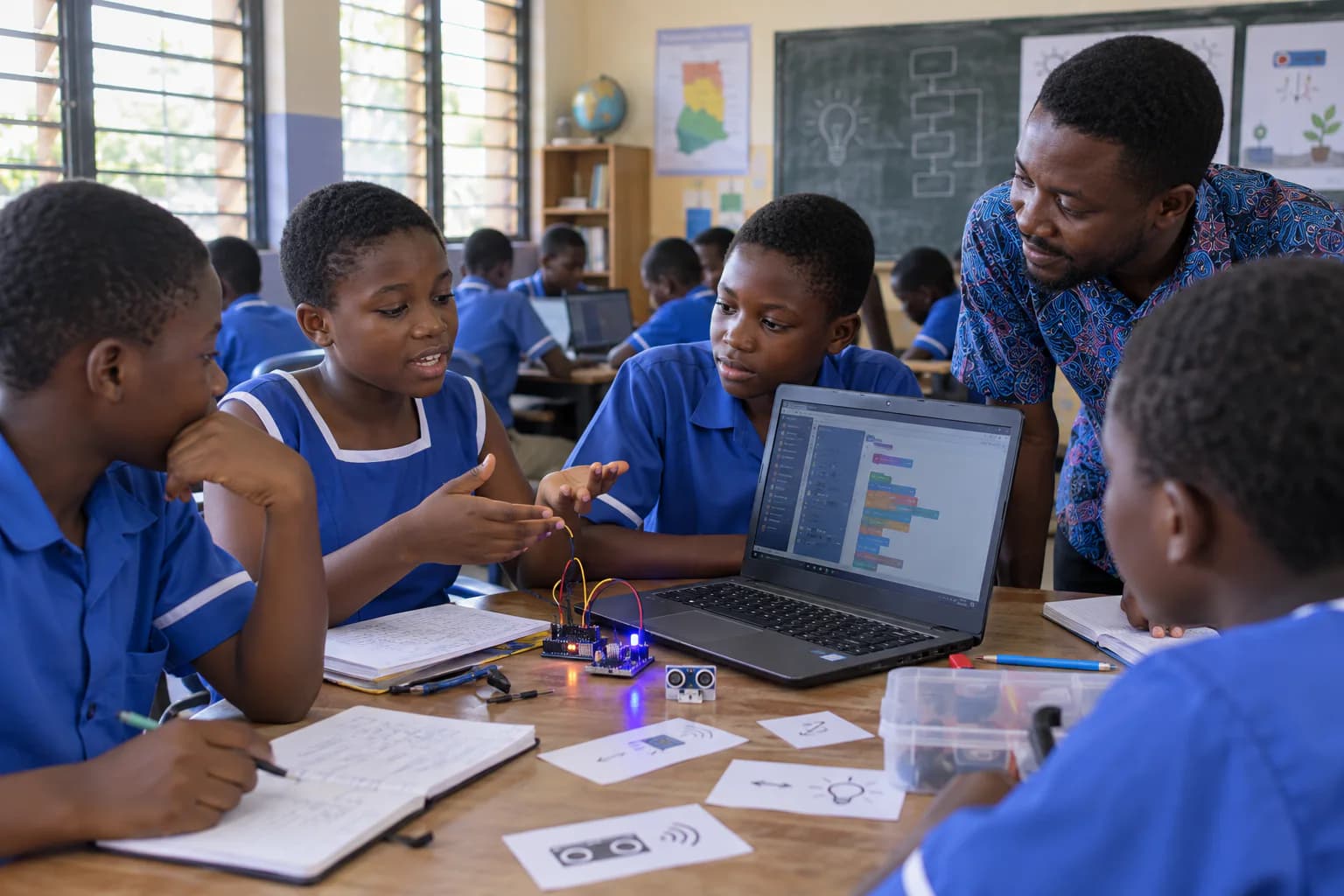
Coding clubs have helped thousands of young Ghanaians discover that they can create with technology. They are valuable spaces for experimentation, identity, and mentorship. But a national capability cannot depend on whether a learner happens to attend the right school, hears about the right programme, has transport after class, or is selected for a competition.
The strategic question is how we move from islands of excellence to a dependable computing experience for every learner. That requires treating coding not as an extracurricular performance and not merely as vocational preparation, but as one expression of computational thinking: a way to structure problems, represent processes, test assumptions, and create systems.
Clubs create sparks. A pathway turns those sparks into national capability.
Stop making programming-language choice the first debate
Schools often begin by asking whether learners should use Scratch, Python, JavaScript, or another language. The better first question is what kind of thinking and creation the learner is ready to demonstrate.
A coherent progression can move through five layers:
- Logic and sequence: instructions, patterns, decomposition, conditions, and debugging—often unplugged.
- Block-based creation: stories, simulations, games, and interactive explanations that make logic visible.
- Physical computing: code connected to sensors, lights, sound, motion, and measured environments.
- Text-based programming and data: greater precision, reusable functions, datasets, interfaces, and automation.
- Product and public problem: learners work with users, constraints, ethics, testing, documentation, and iteration.
The layers are not a race. A learner who can explain and improve a well-designed block programme may have stronger computational understanding than a learner who has copied twenty lines of text-based code.
Coding should travel across the curriculum
Computational thinking becomes powerful when it leaves the computer lesson. Learners can model population change in social studies, build a rainfall data display in science, create an interactive language story, automate a mathematics pattern, or design a simple assistive device.
This does not mean every teacher must become a software developer. It means subject teachers should recognise where sequencing, data, modelling, automation, and debugging deepen their own learning goals. Computing teachers, in turn, need time to plan with colleagues.
Cross-curricular work also makes coding more inclusive. Learners who do not initially identify with “technology” may enter through storytelling, music, agriculture, health, design, or a community problem they care about.
Build a culture of explanation
Typing code is not the same as understanding it. Every coding classroom should make learner reasoning visible through prediction, pair explanation, code tracing, debugging notes, demonstration, and reflection.
I look for four signals:
- Can the learner predict what the programme will do before running it?
- Can the learner locate and explain an error?
- Can the learner change the programme to satisfy a new condition?
- Can the learner explain who the programme is for and what trade-off was made?
These are stronger indicators of capability than completing a tutorial. They also remain useful as languages and tools change.
What it takes to move beyond clubs
Scaling requires a core classroom entitlement and an enrichment layer. Every learner should receive regular, curriculum-aligned computing practice. Clubs, camps, competitions, and mentorship can then provide additional depth—not compensate for a missing foundation.
Schools need shared lesson sequences, offline-capable tools, teacher coaching, age-appropriate assessment, accessible equipment, and a portfolio that follows the learner across years. Districts need communities of practice and support routes. Partners should align with the pathway rather than introduce disconnected platforms.
The national prize
Ghana does not need every learner to become a professional programmer. We need citizens who can understand the systems shaping their lives, collaborate with technical people, interrogate automation, work with data, and create digital solutions when the situation demands it.
Coding is a means to that end. When it is taught as a progression in thinking, making, and public problem-solving, it becomes more than a club activity. It becomes part of how a nation prepares young people to participate in—and shape—the digital economy.
Download the K-12 Coding Progression Framework for African Schools.
Clubs are excellent laboratories—but weak national infrastructure on their own
A club can experiment quickly, build identity and create belonging around making. It can also exclude learners who lack transport, confidence, information or time after school. The correct response is not to abandon clubs. It is to treat them as laboratories whose strongest practices should inform curriculum, teacher development and progression for every learner.
The bridge from enthusiasm to capability
National capability requires continuity across primary, junior high, secondary and post-school opportunities. Learners should not repeatedly restart with the same beginner activity because programmes cannot see one another. Shared capability milestones can connect different providers without forcing them to use the same platform.
What Ghana should standardise
- Core expectations for computational thinking and digital responsibility.
- Evidence standards for debugging, creation and explanation.
- Progression signals that help learners enter at the right level.
- Safeguarding and inclusion requirements.
- Portable recognition of meaningful project work.
Tools, examples and programme identities can remain diverse. The national spine should describe capability, not enforce a single vendor.
The prize
When clubs, schools, universities, industry and community programmes contribute to a visible progression, isolated sparks become a pipeline of confident creators. The measure of success is not the number of coding events Ghana hosts. It is the number of learners who can keep growing after the event ends.
One coding club question became an institutional challenge
A 15-year-old’s question after a 2019 weekend club—whether Ghana would ever build the tools learners were using—captured the limit of club-based exposure. Clubs can awaken ambition, but the surrounding system must provide progression, recognition and increasingly serious work. That learner is now studying AI engineering, a reminder that the next step matters as much as the first encounter.
KodeVR now serves 10,000+ active learners, while InovTech’s wider portfolio has engaged more than 100 schools. This creates an opportunity to connect the flexibility of clubs, the reach of a platform and the continuity of school-based learning. None is sufficient alone.
My prediction is that Ghana’s strongest coding ecosystem will become interoperable around capability rather than brand. A learner’s project history, debugging ability and portfolio should remain meaningful whether they began in a school, community hub, mobile programme or virtual laboratory.