My first technology classroom was not designed as a classroom. It was an internet café. It had no carefully sequenced curriculum, no innovation lab and no guarantee that curiosity would lead anywhere. What it offered was access: a doorway into a world larger than the conditions immediately around me.
That experience shaped how I think about innovation today. Talent is widely distributed. Structured opportunity is not. The work of an African technology builder is therefore not only to create products. It is to build the pathways, institutions and operating systems through which overlooked talent can repeatedly meet meaningful problems.
InovTech grew from that conviction. The journey from learner to trainer, from individual projects to school partnerships, and from physical robotics to KodeVR has taught me that scale is not the multiplication of events. Scale is the preservation of purpose and quality while ownership moves closer to the people who must continue the work.
The opposite of limited opportunity is not exposure. It is a pathway that lets a young person keep becoming.
Proximity produces better questions
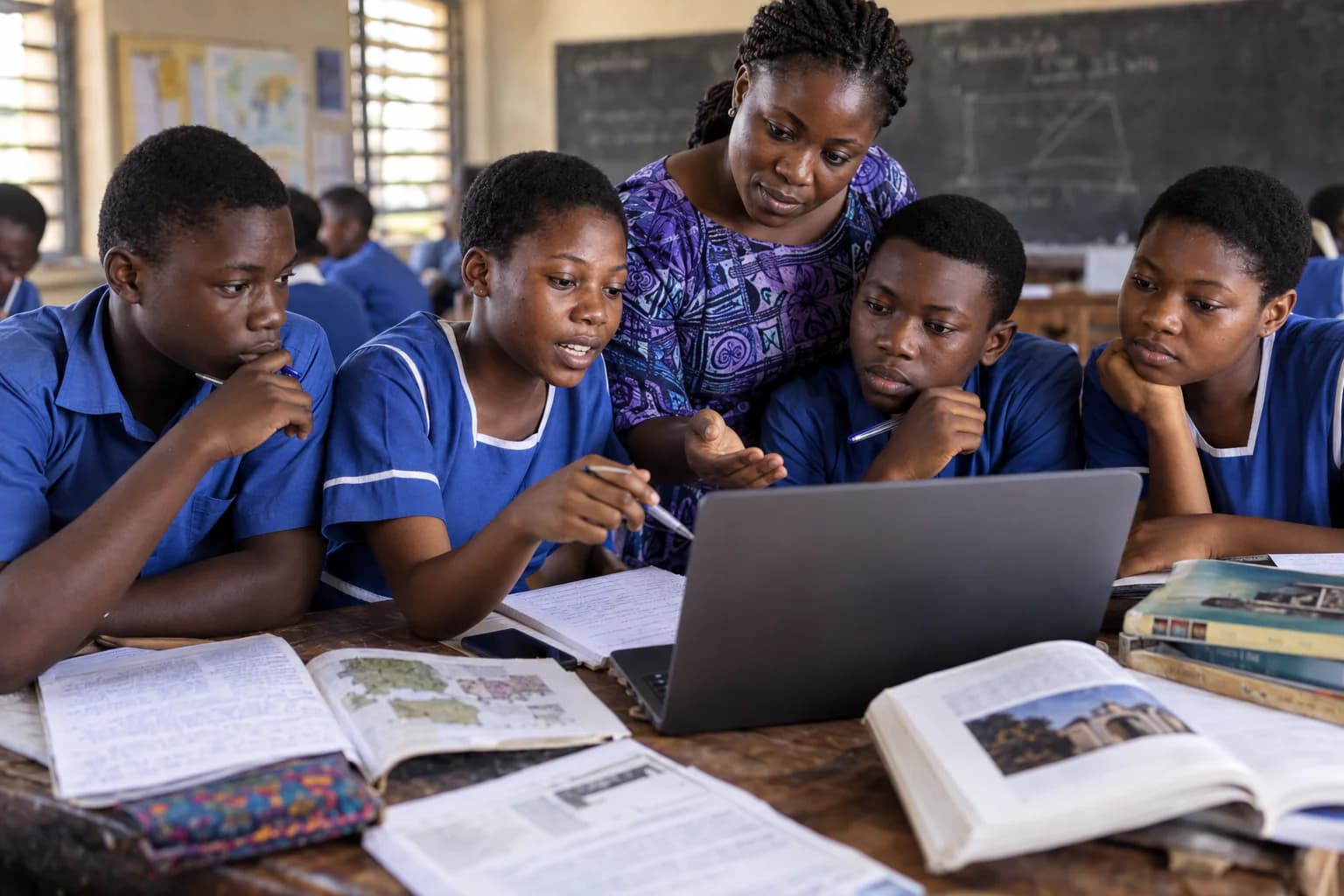
Many solutions fail because they begin with a technology category instead of a lived problem. Proximity changes the question. When you spend time with teachers, learners and school leaders, “How do we bring robotics to schools?” becomes “How do we help this teacher create repeated engineering practice with forty learners, shared tools and an unforgiving timetable?”
The second question is harder and more useful. It exposes the real system: curriculum, confidence, language, electricity, storage, maintenance, assessment, leadership and family expectations. It also prevents the founder from mistaking excitement for adoption.
Constraint is information, not identity
African innovation is often romanticised as doing more with less. Resourcefulness matters, but scarcity should not become a permanent design brief or a reason to lower standards. Constraint is information about what the system must survive. It tells us to design offline capability, shared-device routines, repairable tools, modular curricula and teacher-owned implementation.
The ambition remains world-class learning. The route must be context-aware. KodeVR, for example, emerged from the problem of giving more learners meaningful robotics practice without requiring every school to begin with a fully equipped physical laboratory. Virtual access does not eliminate the value of hardware; it changes the sequence and expands the practice opportunity.
Products do not scale alone
A technology can be distributed quickly. Capability moves at the speed of people, routines and trust. This is why I now think in four connected forms of infrastructure:
- Learning infrastructure: clear progression, relevant challenges and authentic assessment.
- Human infrastructure: teachers, coaches, peer leaders and communities of practice.
- Technical infrastructure: devices, platforms, connectivity, support and repair.
- Institutional infrastructure: timetables, budgets, policies, partnerships and accountability.
A founder who concentrates only on technical infrastructure can create a good demonstration. An institution must align all four.
Evidence should make us more honest
Reach matters. The work connected to my wider portfolio has reached more than 25,000 learners, trained over 2,500 educators and engaged more than 100 schools, while KodeVR has grown beyond 10,000 active learners. Those numbers represent access created and trust earned. They are not, by themselves, proof of every learning outcome.
Responsible leadership distinguishes reach, experience, capability, transfer, progression and durability. It asks not only how many learners participated, but what they can now build and explain; not only how many teachers attended, but what practice changed; not only how many schools joined, but what remains when external support reduces.
The founder must design for disappearance
One of the hardest lessons in institution-building is that the founder cannot remain the operating system. If quality depends on one person’s presence, charisma or memory, growth increases fragility. The work must become teachable, documented, measurable and locally owned.
That means building facilitator standards, lesson architectures, implementation checklists, evidence routines and leadership pathways. It means allowing other people to improve the model. The founder’s role shifts from delivering every experience to protecting purpose, developing people and designing systems that make good decisions more likely.
A thesis for African technology leadership
Africa does not need innovation theatre. It needs builders who can hold ambition and operating reality in the same frame. We need products designed close to the problem, institutions capable of supporting people, evidence honest enough to improve decisions and partnerships that transfer ownership rather than dependency.
My journey began with access to an internet café. The work now is to ensure that a child’s future does not depend on such an accident. The institution we build must make curiosity less fragile, opportunity more structured and technological agency a normal expectation for African learners.
Download the STEM Programme Operating System (PDF)—the implementation architecture I use to move initiatives from founder-led activity to durable institutional capability.